Guides
Buying arborist equipment in Canada vs the United States, and what duty adds
Tree service business operations across the border: how duty, exchange rates, GST/HST, warranty and parts change what US arborist gear really costs.
What to take away
- For tree service business operations in Canada, a US sticker price is only the start: duty, brokerage, GST/HST and the exchange rate all land on the invoice.
- Most arborist gear enters duty free under the CPTPP or CUSMA, but trucks and trailers face a 6.1 per cent Most-Favoured-Nation tariff unless they qualify as originating.
- Warranty work on US-bought equipment often means shipping parts north at your cost, so ask who pays freight before you sign.
- You cannot simply drive a US truck homeTransport Canada requires the vehicle be admissible, modified to Canadian standards and registered at the border.
- Serving US clients can create US federal and state tax filing duties, so keep the work and the invoicing structure clean.
- Buying Canadian is often cheaper once freight, brokerage, duty and downtime are counted, especially for parts-heavy machines.
What Canadian arborists actually buy south of the border
Canadian tree crews cross the border for a predictable list: chippers, stump grinders, bucket trucks, climbing kits and rigging hardware. Bars, chain and the odd used pickup round it out.
Named examples in that trade include Bandit, Vermeer, Morbark and Carlton chippers and stump grinders; Altec, Terex and Versalift bucket trucks; and Petzl, DMM, Notch and Buckingham climbing and rigging gear. US listings often appear on Machinery Trader, Equipment Trader and IronPlanet. Canadian buyers compare with dealers such as Vermeer Canada, Brandt and Finning.
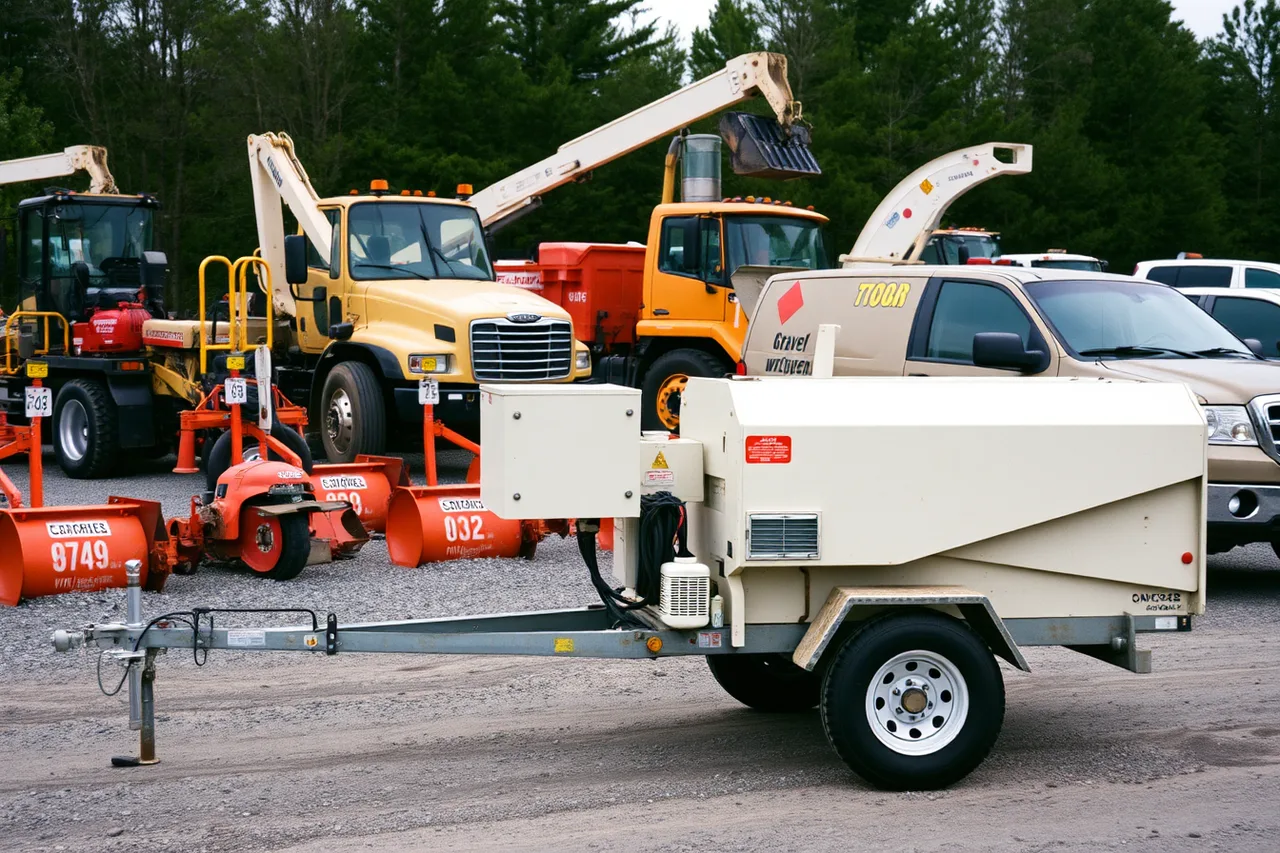
The draw is price and selection. US dealers stock more units, and a favourable exchange rate makes a used chipper look cheap on the listing page.
That list matters because each item is treated differently at the border. A handsaw and a climbing kit are simple commercial goods. A self-propelled chipper is a machine with an engine, a serial number and a tariff classification. A bucket truck is a motor vehicle with its own rulebook.
The practical split is between gear you can courier and gear you must declare and clear. Couriers handle small parcels and collect tax at delivery. Anything with an engine, a VIN or a value over the courier threshold needs a commercial invoice, a classification and a broker.
Before you compare prices, know what you are actually buying and how it will be classified. If you are still deciding what belongs in the fleet, our tree service equipment checklist sets out the first purchases in order.
What the gear is worth in the fleet
A used US chipper can look like a bargain next to a Canadian dealer quote. But the machine is only useful if it runs, and the parts network behind it is what keeps it running. That is the trade you are making when you buy across the line.
Duty, tariffs and brokerage on imported tree gear
Duty depends on two things: what the goods are and where they were made. Canada applies its tariff schedule at the border, and the rate for your chipper or climbing kit comes from the classification code plus the country of origin.
The Canada Border Services Agency (CBSA) assesses that duty at the border.
Origin is not the same as where you bought it.
If the equipment was manufactured in the United States, Mexico or a country covered by a Canadian free trade agreement, it can often enter duty free. The importer has to claim the preference and hold the right documentation.
A US-made stump grinder bought in Buffalo can qualify. A Chinese-made chipper sitting on a US dealer lot usually does not, even though you paid US dollars for it.
Brand matters here. A US-assembled Vermeer or Bandit chipper can qualify for CUSMA or CPTPP. A Chinese-built engine or an import brand with no North American origin usually cannot.
Where the goods do not qualify for a preference, the Most-Favoured-Nation rate applies. For many arborist machines that is 6.1 per cent, the rate Canada applies to a wide range of machinery and vehicles outside a trade preference. On a used truck or trailer, that is real money.
Brokerage is separate from duty. A customs broker charges a fee to prepare the entry, post the bond and clear the shipment. Expect a flat fee per entry plus a disbursement charge, and expect it whether or not duty is owed. A typical fee is C$150 to C$350 per entry, plus disbursements.
British Columbia crews watching cross-border pricing should read the province's own tariff response page for what it means for businesses buying south of the line.
The documents that decide the rate
- Commercial invoice showing seller, buyer, price and currency
- Country of origin for each item, not just the shipping address
- Tariff classification code for each distinct product
- Free trade agreement certification, where the origin qualifies
- Bill of lading or carrier documents
- Your business number for the importer account
Get the origin wrong and you pay duty you did not owe, or you claim a preference you cannot support and face a reassessment later.
Exchange rate math on a US-priced chipper or climbing kit
Exchange rate math is simple but easy to skip. Take the US price, multiply by the rate your bank or card actually gives you, then add duty, brokerage, freight and GST/HST.
The advertised rate is not the rate you get. Card issuers and banks add a spread of roughly two to three per cent on top of the mid-market rate.
Worked example. A used chipper listed at US$28,000 in Washington state.
| Line | Calculation | Amount |
|---|---|---|
| US list price | given | US$28,000 |
| Converted at 1.36 | 28,000 x 1.36 | C$38,080 |
| Card or wire spread at 2.5 per cent | 38,080 x 0.025 | C$952 |
| Duty at 6.1 per cent, no preference | 38,080 x 0.061 | C$2,323 |
| Brokerage and entry fee | flat | C$250 |
| Freight to Vancouver | quoted | C$1,800 |
| Subtotal before tax | sum | C$43,405 |
| GST at 5 per cent | 43,405 x 0.05 | C$2,170 |
| Landed cost | total | C$45,575 |
That machine could be a Vermeer BC1000XL, a Bandit 12XP or a Morbark M15R; the landed math is the same.
The US$28,000 machine costs about C$45,600 landed. That is roughly 63 per cent above the converted sticker, and it is the number to compare against a Canadian dealer quote. If the Canadian quote for the same class of machine is C$44,000 delivered with a local warranty, the cross-border trip is not a saving.
The same arithmetic applies to a smaller purchase. A US$1,200 climbing kit converts to about C$1,630, plus spread, plus GST at delivery. Duty is usually nil on hand tools and personal protective equipment from a qualifying origin, but the tax and the spread still apply.
Run the numbers before you commit, and run them on the landed cost, not the list price. Our guide to new vs used tree service equipment is a useful check on whether the machine you are importing is the one you should be buying at all.
Where the exchange rate hurts most
Big-ticket machines carry the most currency risk because the dollar amount is large and the purchase is a single event. A one-cent move on a C$40,000 machine is C$400. On parts orders spread across a year, the same move is smaller per order but it never stops.
Warranty, parts and service when the dealer is in another country
A warranty is only as good as the distance to the person honouring it. Canadian consumer protection law does not reach a US dealer the way it reaches a Canadian one, and the practical remedy is whatever the written warranty says plus whoever will do the work.
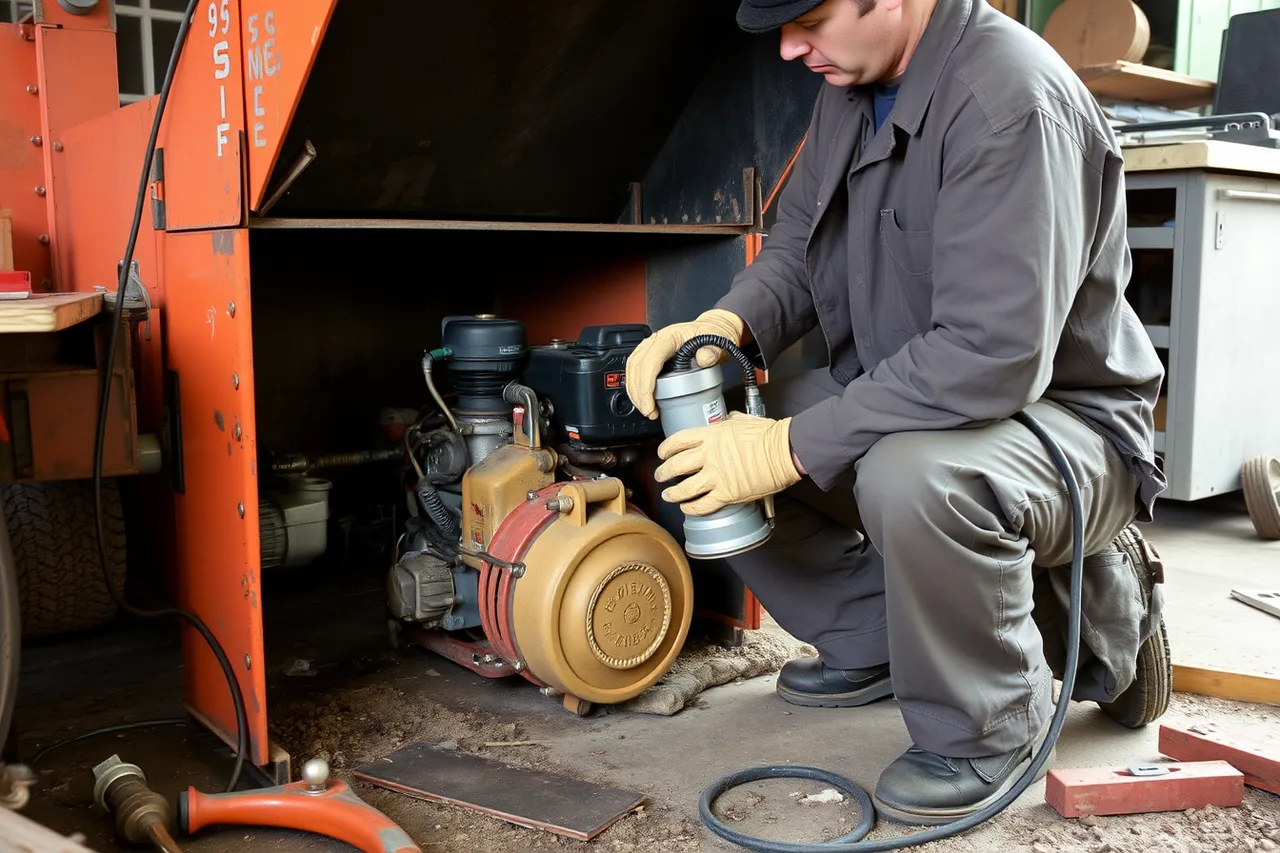
Ask three questions before buying. Who performs warranty repairs, and are they in Canada. Who pays freight on a warranty part, both directions. And what happens if the machine is down for three weeks in July, which is the worst possible month for a tree crew.
Many US manufacturers run Canadian dealer networks, and a Canadian dealer will often honour the manufacturer's warranty even on a machine bought south of the line. That is the best case.
Vermeer Canada, Bandit's Canadian dealers and Morbark's Canadian dealers are examples of that network. A grey-market import from a US auction site like IronPlanet may have no Canadian dealer at all.
The worst case is a grey-market import with no Canadian dealer. Every part is a cross-border parcel and every repair is your problem.
Parts availability is the quieter cost. A machine that needs a proprietary hydraulic pump shipped from the US can sit for a week waiting on customs.
A machine with a Canadian parts network can be back on the job the next morning. For a crew billing by the day, downtime is the largest line item nobody puts in the spreadsheet.
If you are choosing between brands on this basis, our rundown of tree service equipment brands looks at which ones have real Canadian parts and service coverage.
What to put in writing
Get the warranty terms in the purchase agreement, including the territory covered and who pays freight. Verbal assurances from a salesperson do not survive a border crossing.
Importing a truck or trailer from the United States
A bucket truck or a chip trailer is not a chipper. Vehicles have their own import regime, and it starts before you buy.
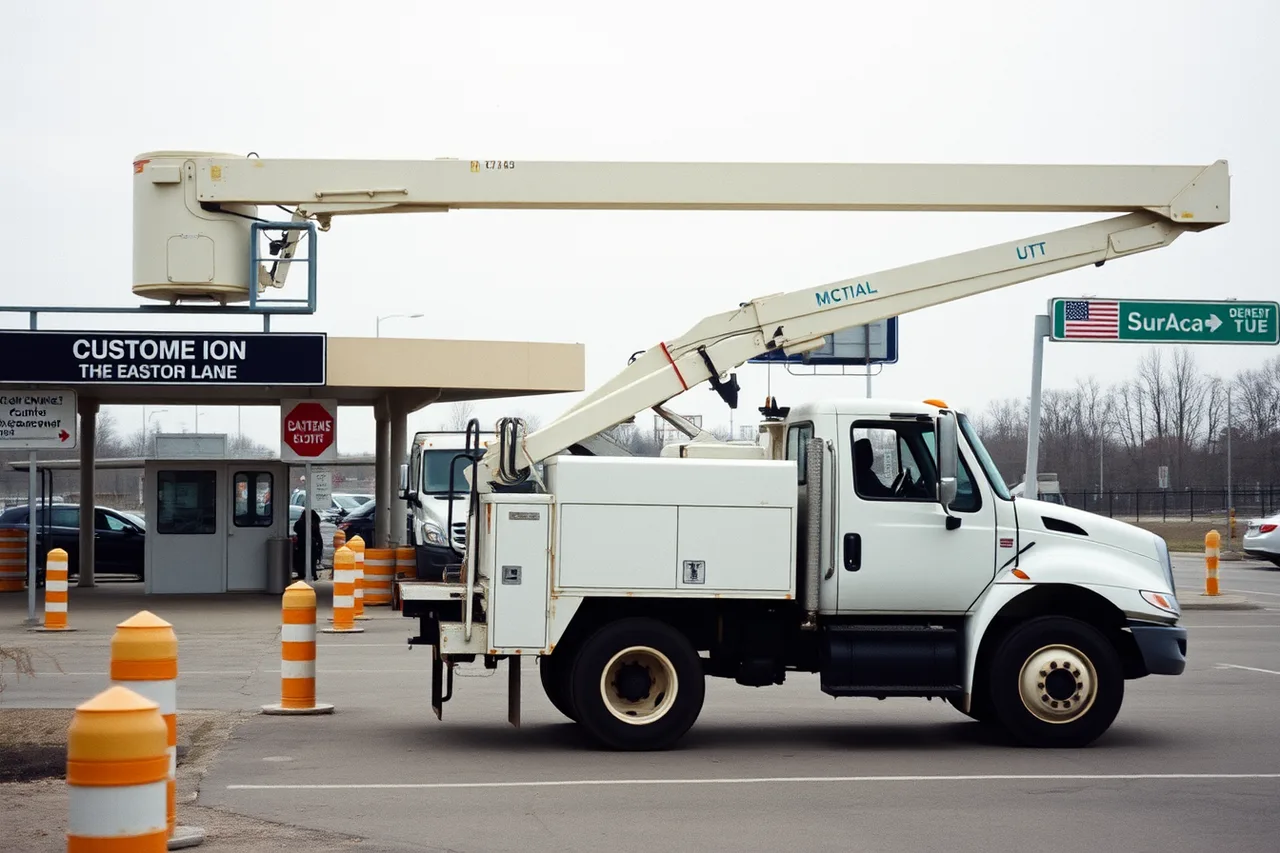
Transport Canada sets out the rules for importing a vehicle from the United States and Mexico, including admissibility, the modifications needed to meet Canadian standards, and the paperwork required at the border.
Altec, Terex and Versalift are common bucket truck makes in the US market.
Not every US vehicle is admissible. The Registrar of Imported Vehicles list decides whether a given make, model and year can be brought in at all. A truck that is not on the list stays in the United States, no matter what you paid for it.
Compliance is not automatic. Daytime running lights, metric labelling, child restraint anchor points on some models and electronic immobilizer requirements are common items. A commercial truck may also need an inspection before it can be registered provincially.
Then there is the tax. GST applies on import, and provincial tax may apply at registration depending on where you live. Alberta has no provincial sales tax, British Columbia and Ontario do, and the rate you pay follows the province where the vehicle is registered.
Budget for the whole chain: purchase price, currency spread, transport, inspection and tax. A truck that looks C$10,000 cheaper in Washington can land C$15,000 more expensive in Kelowna.
Trailers are simpler, not simple
A chip trailer still needs a classification, an origin and a tax calculation. It usually avoids the admissibility list, but it does not avoid duty or GST.
Serving cross-border clients without creating tax problems
Working for a US client is not the same as importing gear, and the tax rules are different. If you cross the line to prune or remove trees, you may create a US federal or state filing obligation.
You may owe US tax on that income. The threshold varies by state and by how the work is structured.
A Canadian corporation doing work in the United States generally needs to consider whether it has created a US trade or business. That is a question for an accountant who works on both sides, not a question to settle from a forum post.
On the Canadian side, keep your GST/HST house in order.
The Canada Revenue Agency explains GST/HST for businesses, including when you must register, how to charge tax and how to claim input tax credits on equipment you buy for the business.
If you are not yet registered, the CRA's guidance on registering your business covers the business number and the program accounts you need.
Your business number is the key that opens the rest. It identifies you for GST/HST, payroll and import accounts. Without an import account, you cannot clear a commercial shipment yourself, and you cannot claim the input tax credit on the GST you paid at the border.
Invoice the US client in US dollars if that is the deal, but record the Canadian dollar equivalent at the rate on the transaction date. Currency gains and losses on the invoice are a bookkeeping matter, but they are not optional.
Keep the two sides separate
Do not run US revenue through a personal account, and do not assume a Canadian GST/HST registration covers US tax. They are different systems with different filing duties.
When buying Canadian is the cheaper decision
Buying Canadian wins more often than the sticker price suggests. Once you add the currency spread, duty on non-originating goods, brokerage, freight and the risk of downtime, a Canadian dealer quote is frequently the lower landed cost. Compare a US dealer quote from Machinery Trader or IronPlanet with a Canadian quote from Vermeer Canada, Brandt or Finning.
The case is strongest for machines that need parts and service. A chipper, a stump grinder or a bucket truck is a long-term relationship with a dealer, and a local relationship is worth real money when the machine fails on a Friday afternoon in July.
The case for buying south is strongest for small, standard items with no service tail: hand tools, climbing hardware, rigging rope, chain and bars. If the price gap is wide and the item is a commodity, the border friction is small and the saving is real.
There is also a policy dimension. Provincial governments have been active on tariffs and procurement, and BC's response is one example of how the ground has shifted for cross-border purchasing. Rules and rates can change, so check the current position before you commit to a large order.
Finally, look at the whole business, not one machine. Financing, insurance and cash flow all interact with a cross-border purchase. Our guide to startup costs and funding options covers how lenders view equipment, and our tree service equipment and setup guide sets out how the pieces fit together.
A simple test
If the landed cost saving is under ten per cent and the machine has an engine and a warranty, buy Canadian. If the saving is large and the item is a commodity, the border is worth crossing.