Guides
4 parts of tree service equipment, explained
The four parts of tree service equipment are the cutting head, the climbing system, the chip and waste stream, and the stump grinder machine.
What to take away
- The four parts of Tree service equipment are the cutting head, the climbing and access system, the chip and waste stream, and the stump grinder.
- Each part fails in its own way, so each needs its own inspection, parts and replacement rule.
- A saw that will not start, a rope past its retirement date, a dull chipper knife and a grinder with a worn tooth all stop a crew at a different point in the day.
- Buy the part that matches the work you accept, and only after that work has arrived. A removal crew and a plant-health crew need different versions of all four.
- Track cost per crew hour and downtime hours per machine, not the purchase price alone.
This article covers equipment management for tree care businesses. It is general business information, not arboricultural, safety, pesticide, electrical or legal advice.
Climbing, rigging, felling and chainsaw work at height must be taught hands-on by a certified arborist trainer under CSA Z133 and the applicable provincial or state occupational health rules. OSHA rules apply to United States crews. CSA Z133 and provincial labor ministry rules apply to Canadian crews.
Utility clearance, pesticide application, private-tree permits and cross-border duties each have their own authority; confirm the current requirement with the relevant municipal bylaw office, provincial labor ministry or customs broker before you rely on it.
Part 1: the cutting head
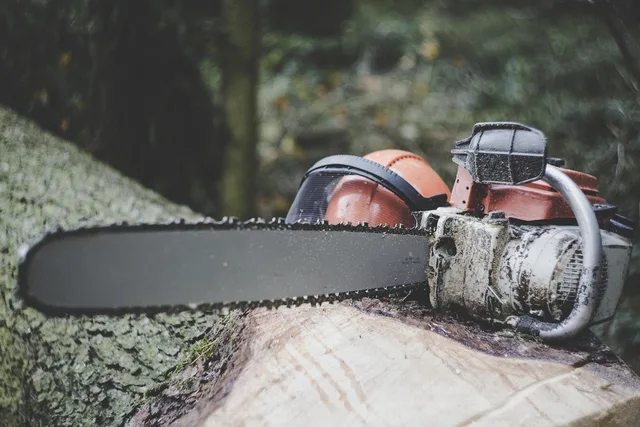
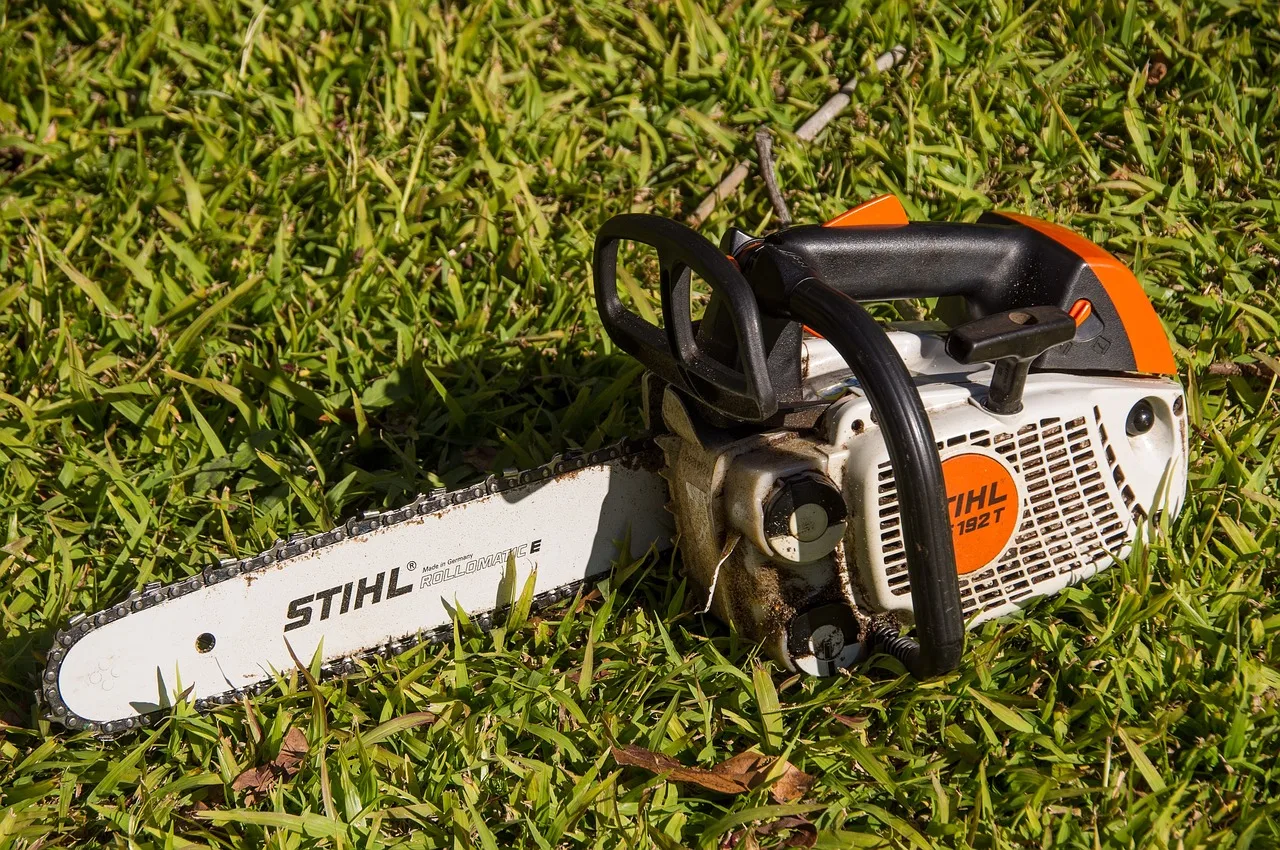
The cutting head is the saw, chain and bar that does the felling, limbing and bucking. It is the part that touches wood first and wears fastest.
Common powerheads for removal work include the Stihl MS 261 and the Husqvarna 550 XP. Both are rated for 16 to 20 inch bars. A powerhead in that class typically sells for $600 to $1,100 new, a bar for $60 to $120, and a chain loop for $25 to $45.
Chains stretch, bars wear unevenly and sprockets round off. A crew running three saws on a removal day will dull more chain than a crew doing one crown reduction. That difference decides how many spare chains ride in the truck.
Match bar length to the largest stem you actually cut, not the largest you might be asked to cut. An oversized bar on a small powerhead cuts slower and tires the operator. The manufacturer's manual states the bar and chain combination the powerhead is rated for; that is the authority, not a forum thread.
Consumables belong to this part: chain oil, files, depth gauges, spark plugs, air filters. Budget them per crew hour rather than per saw, because a dull chain costs more in labor than the file that would have sharpened it.
Part 2: the climbing and access system
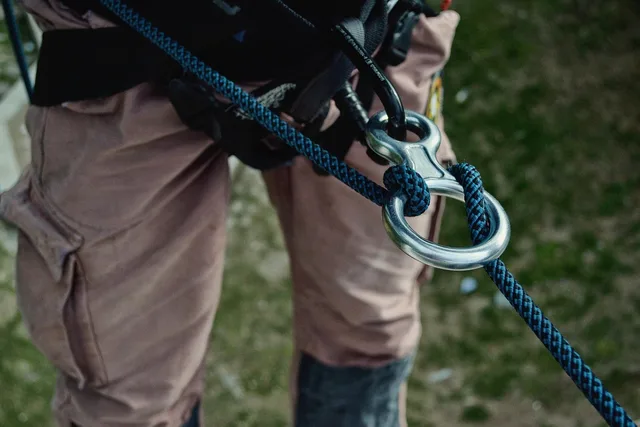
The climbing and access system is everything that gets a person to the work:
Climbing and access system
- ropes
- saddles
- lanyards
- spurs
- friction devices
- rigging blocks
- the bucket truck or aerial lift where the site allows one
Common saddles include the Petzl Sequoia and the Buckingham Ergovation. Teufelberger and Sterling make climbing ropes with manufacturer-set retirement dates. A saddle typically costs $250 to $450, a 150 foot climbing line $150 to $250, and a full starter kit $600 to $1,200.
Ropes and hardware have service lives and inspection intervals set by the manufacturer, and by CSA Z133 for Canadian crews. A rope that has taken a shock load, or that shows glazing or a flat spot, comes out of service.
The decision is not a judgment call for the crew; it is written in the manufacturer's instructions and the standard.
Access equipment is the largest capital item in this part. A bucket truck like the Altec AT40 reaches about 40 feet; the Genie TZ-50 towable lift reaches about 50 feet. Both need level ground and a clear drop zone. On tight urban lots in the Canadian market, such as Toronto or Montreal, the climber still wins.
A used bucket truck typically sells for $25,000 to $80,000, and a new aerial lift truck typically runs above $120,000. Confirm both figures with a dealer before you budget.
Track utilization per access unit. A lift that sits idle four days a week is a payment, insurance and inspection cost with no revenue attached. Compare it against the climbing kit it replaced.
Part 3: the chip and waste stream
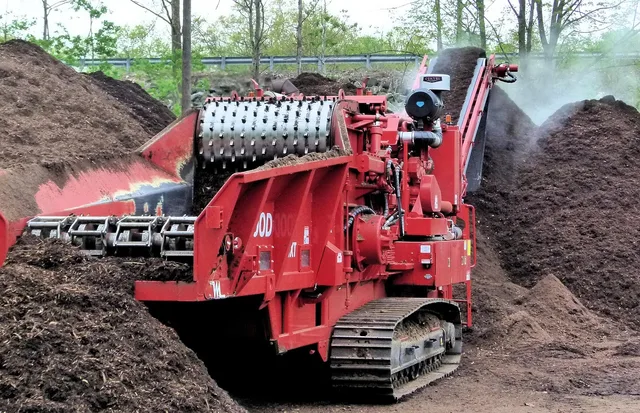
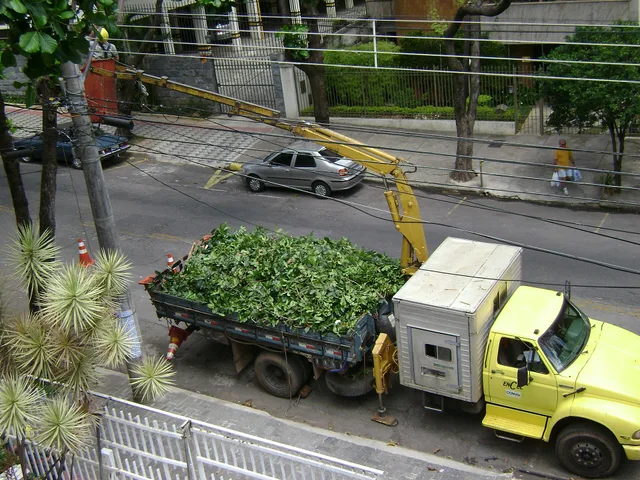
The chip and waste stream is the chipper, the truck or trailer that carries chips and logs, the rake and blower for cleanup, and the disposal route at the end. Bandit 12X and Vermeer BC1000XL are common tow-behind chippers that take up to 12-inch material.
A used 12 inch chipper in that class typically sells for $12,000 to $30,000, and a new one typically runs $35,000 and up. A set of chipper knives typically costs $200 to $500.
This part decides how fast a crew clears a site. A chipper that plugs on soft wood, or knives that need sharpening, turns a four-hour job into six. Knife condition is the single most controllable variable here, and it is checked before the crew leaves the yard.
Disposal is where the money quietly leaves. Municipal yard-waste fees, dump hours and haul distance all land in the job cost. A crew that chips into the truck and tips at the nearest facility beats one that drags whole logs across the city.
Cleanup tools matter more than they look. A blower and a good rake are what the customer sees at the end, and what the neighbor remembers when they need a tree removed next spring.
Part 4: the stump grinder
The stump grinder is the fourth part, and the one most often bought last and regretted first. It is a separate machine, a separate maintenance schedule and a separate skill. Vermeer SC252 and Rayco RG55 are walk-behind grinders with cutting widths around 20 to 35 inches.
A new machine in that class typically costs $20,000 to $35,000, and a used one $8,000 to $18,000. A full set of replacement teeth typically runs $150 to $400.
Grinder teeth wear in a pattern that depends on soil, grit and stump size. A dull set cuts slowly and burns fuel; a broken tooth can throw. Tooth replacement is a scheduled cost, not an emergency.
Grinding depth and grind-away of surface roots are quoted before the job, so the machine's capability sets what you can promise. A grinder that fits through a 36-inch gate serves residential work a tow-behind cannot reach.
If you do not own one, the arithmetic is simple: your quoted grind price minus the subcontractor's charge, multiplied by grinds per month, against the payment, insurance and maintenance on the machine. Substitute your own figures. Where a current price matters, the manufacturer's dealer network publishes it.
Buying the four parts new or used
Each part has a different used-market risk. Saws and climbing hardware are cheap enough to buy new and are hard to inspect for hidden damage. Chippers and grinders are expensive enough that used makes sense, but only after a mechanic logs engine hours, checks the clutch and the belt drive, and inspects the frame for cracks and weld repairs.
Cross-border purchases add duty, brokerage and sometimes a different emissions standard. Confirm the tariff classification and the current rate with a customs broker before you commit. The full cost comparison sits in our new versus used tree service equipment cost guide, which works through the same four parts line by line.
| Part | Main wear item | Inspection owner | Replacement trigger |
|---|---|---|---|
| Cutting head | Chain, bar, sprocket | Climber or saw operator | Manual's wear limits, cut speed drop |
| Climbing and access | Ropes, hardware, lift | Crew leader | Manufacturer interval, shock load, defect |
| Chip and waste | Chipper knives, truck | Yard lead | Cut quality, plugging, scheduled hours |
| Stump grinder | Teeth, belts, bearings | Grinder operator | Tooth wear pattern, vibration, cut time |
US and Canadian rules that govern the four parts
The Occupational Safety and Health Administration: Tree Care Industry Standards page links arboricultural work to general-industry requirements for records, walking and working surfaces, aerial lifts, protective equipment and first aid. Use it to connect equipment choice to worker competence and maintenance.
The Occupational Safety and Health Administration: Tree Care Industry Overview names pruning, removal, plant health care, cabling and transplanting as the work, and points to hazard recognition and safety program resources.
The U.S. Bureau of Labor Statistics: Tree Trimmers and Pruners describes the trade using climbing, rigging, hand tools, power tools and truck-mounted lifts, and publishes wage estimates by area.
In Canada, CSA Z133 sets the tree care standard, and the provincial labor ministries enforce the workplace rules for crews there. The regulators include Ontario's Ministry of Labour, Immigration, Training and Skills Development and Quebec's CNESST.
The International Society of Arboriculture issues separate credentials. Each has defined eligibility, exams, renewal and scope. The pathways include:
- Certified Arborist
- utility
- climbing
- aerial-lift
- tree-risk
Credential scope tells you who may operate which part of the kit.
Review the equipment standard annually
Once a year, walk the four parts against what the business actually does now. Compare the services you accept, manufacturer bulletins, crew feedback, repair records and incidents.
Retire anything the manual or the standard has moved past. Write the approved list with an effective date, name who owns each part, and keep old versions out of the yard.
Common questions
What are the four parts of tree service equipment?
The four are named in the takeaways at the top. Each has its own wear items, inspection interval and replacement trigger, which is why grouping them as one equipment budget hides the part that is failing.
Which part should a new business buy first?
The cutting head and a basic climbing kit, because they are the lowest capital cost and the work cannot start without them. Chippers and grinders are separate machines with their own inspection and service schedule.
How do I decide between a bucket truck and a climbing kit?
Compare the sites you actually quote. A lift needs level ground and a clear drop zone; a climber reaches tight backyards a truck cannot enter. Track utilization on whichever you own before adding the other.
Who sets the inspection rules for ropes and hardware?
The manufacturer's instructions and CSA Z133 set retirement and inspection criteria for crews in Canada, and a certified arborist trainer teaches the hands-on checks. United States crews follow the manufacturer's instructions and the OSHA rules for the task. Do not set your own interval in place of those.