Guides
How Canadian arborists read CSA Z133 and provincial OHS rules together
Arborist pruning work in Canada: how CSA Z133, Ontario OHSA, BC OHS Regulation and Alberta OHS fit together, with due diligence steps for tree crews.
What to take away
- For arborist pruning work in Canada, your legal duty comes from the provincial OHS act or regulation that applies where the tree stands.
- Ontario OHSA, BC OHS Regulation and Alberta OHS all impose employer duties that overlap with Z133 on hazard assessment, training, supervision and fall protection.
- WorkSafeBC and Alberta OHS publish guidance that turns the BC OHS Regulation and Alberta rules into field-level expectations for climbing, chainsaw use and tree falling.
- Due diligence under the internal responsibility system is proven with documents: hazard assessments, training records, equipment inspections and incident reports.
- One crew rulebook can satisfy all three regimes if you build it to the strictest common requirement and record the provincial variations.
- When a pruning incident is investigated, the first documents requested are usually the same ones that demonstrate due diligence.
Where CSA Z133 sits in Canadian law: a standard, not a statute
CSA Z133 is a voluntary standard. It is not a law. No provincial officer writes a ticket for breaching Z133 by itself.
That distinction matters for how you use it. A standard becomes enforceable in one of three ways: a regulation adopts it by reference, a contract requires it, or a court or tribunal treats it as evidence of what a reasonable employer would do.
In Canada, OHS acts and regulations are the law. Standards such as CSA Z133 sit alongside them and help define the required level of care. The Canadian Centre for Occupational Health and Safety sets out how acts and regulations relate to each other.
For tree work, the practical result is that Z133 supplies the technical detail that provincial regulations often leave general. A regulation may say you must protect a worker from falling. Z133 says how a climbing system, work positioning lanyard and anchor point should be set up.
Provincial adoption varies. Some regulators reference Z133 directly in guidance. Others do not name it but expect an equivalent level of protection. Either way, the standard is the common language across the country.
If you are setting up a new company, the compliance checklist for new owners walks through the registration and safety steps that come before field procedures.
What CSA Z133 actually requires of arborist pruning work
CSA Z133 arboricultural operations standard covers the full range of tree work: pruning, removal, rigging, climbing, aerial lift use, chipper operation and stump grinding. Its requirements are written for the tasks crews do every day.
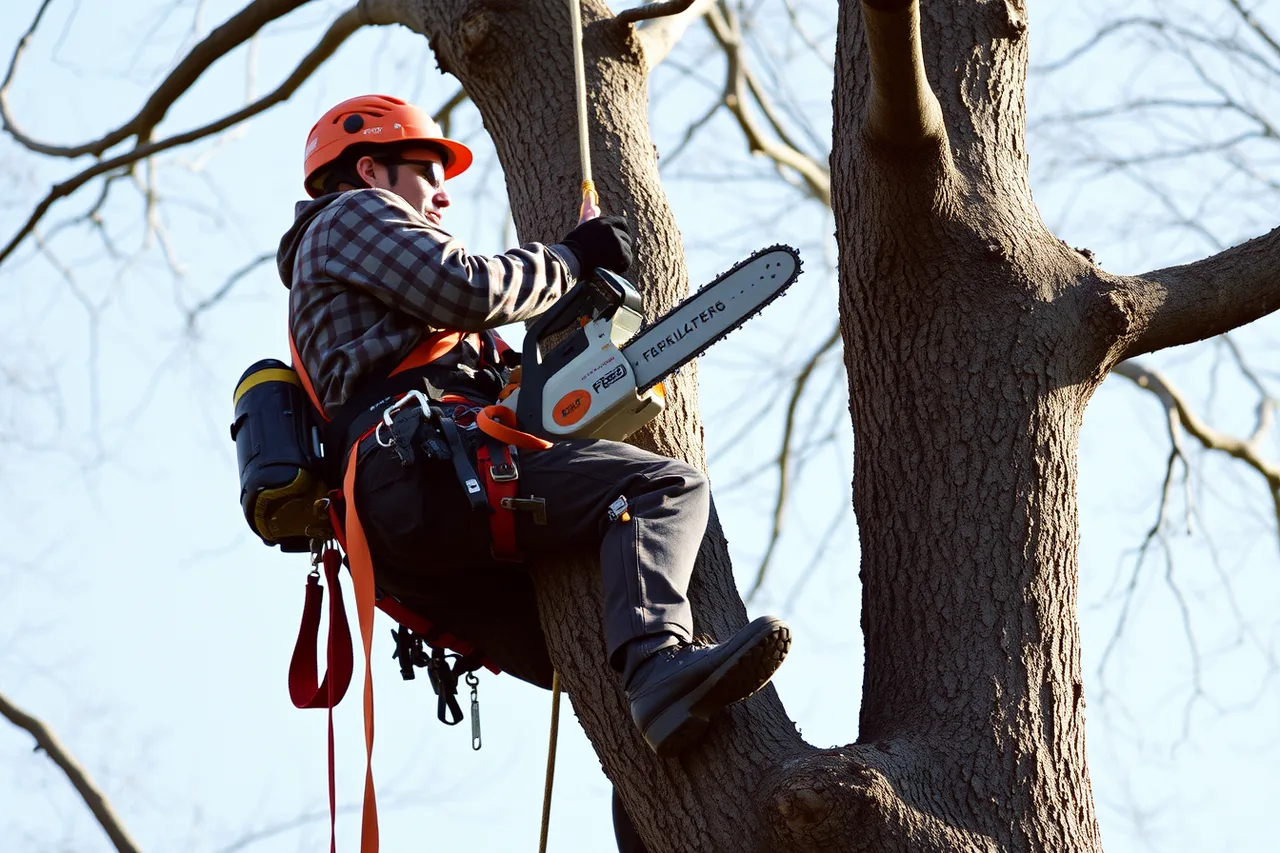
For pruning specifically, the standard expects a job briefing before work begins. The briefing covers the tree, the hazards, the sequence of cuts and the escape routes. It is short, but it is recorded.
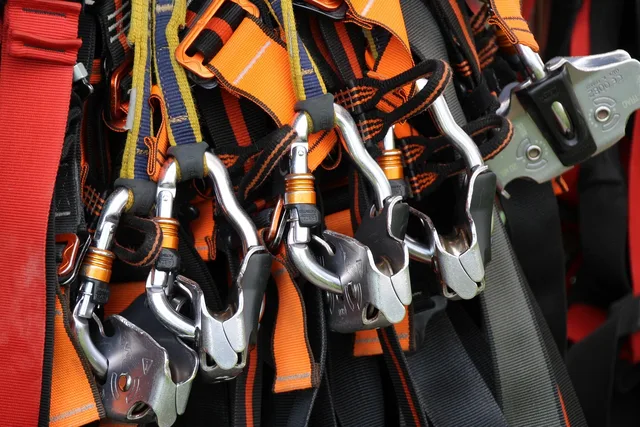
Climbing systems must meet defined criteria. The standard addresses anchor points, friction hitches, climbing lines, work positioning and the use of a second means of attachment when a chainsaw is running. Fall protection tree climbing rules under Z133 are more prescriptive than most provincial regulations.
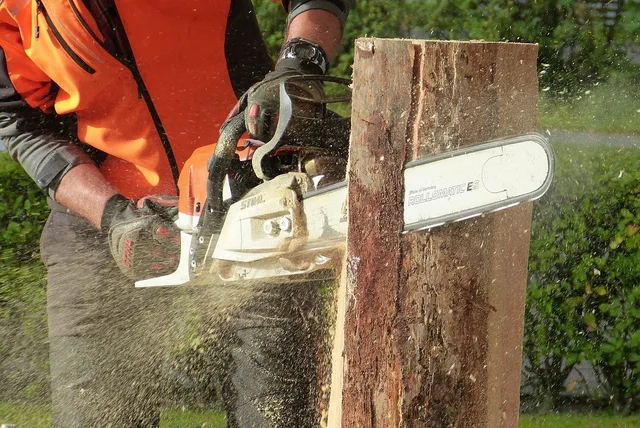
Chainsaw safety arboriculture requirements include starting procedures, chain brake checks, cut-resistant leg protection, and a ban on one-handed cutting where two hands can be used. The standard also sets out when a tree is too hazardous for a climber and must be worked from a lift or with rigging from the ground.
Electrical hazards get their own section. Minimum approach distances are specified for qualified line clearance arborists and for general tree workers who encounter conductors.
The standard also covers equipment inspection, rope retirement criteria, and the training and competence expected of climbers, ground workers and aerial lift operators.
One point owners miss: Z133 is revised on a cycle. The edition year printed on the cover of the standard is the one your procedures should cite. The edition your crew trained on may not be the edition in force when an incident is investigated.
A second point: the standard does not replace a provincial regulation that is stricter. If BC OHS Regulation requires more, you follow BC. If Z133 requires more, you follow Z133 to show due diligence.
Ontario OHSA duties that overlap with Z133 for tree crews
In Ontario, the Occupational Health and Safety Act sets the legal duties. The Ontario OHSA employer duties are broad: provide a safe workplace, ensure equipment is maintained, train and supervise workers, and appoint competent supervisors.
The act also imposes duties on supervisors and workers. A crew leader who directs pruning work is a supervisor under the act, whether or not the title appears on a business card.
Where Z133 overlaps with Ontario OHSA, the pattern is consistent. The act requires fall protection; Z133 describes the system. The act requires training; Z133 describes the competencies. The act requires hazard assessment; Z133 describes the job briefing.
Ontario has additional rules that matter to tree crews. The Workplace Safety and Insurance Board, WSIB, covers most tree service employers, and independent operators can opt in. Clearance from electrical utilities is regulated separately, and utility arborists need specific training.
Ontario also has a working at heights training requirement for certain construction projects. Tree work on a construction site can trigger it. Confirm the scope with the Ministry of Labour before assuming your pruning crew is exempt.
The internal responsibility system is the backbone. Employers, supervisors and workers share the duty to identify and control hazards. A crew that documents hazard assessments and toolbox talks is feeding that system.
For owners building a training programme, the record matters as much as the order of topics. A competency sign-off for each climber, ground worker and lift operator sits with the tree service equipment inspection log for each saw and climbing line.
BC OHS Regulation and WorkSafeBC guidance on falling and chainsaws
British Columbia regulates tree work through the OHS Regulation, enforced by WorkSafeBC. The searchable OHS Regulation and related materials hold the current text of each part.
Several parts of the BC OHS Regulation are relevant to arborist pruning work. Part 11 Fall Protection, from section 11.1 onward, sets the duty to use fall protection and the systems that satisfy it, including fall restraint, fall arrest and the training of workers who use them. Tree climbing is addressed through these general duties plus WorkSafeBC guidance.
Part 12 covers tools, including chainsaws. It requires guarding, maintenance and safe work procedures. WorkSafeBC has published guidance on chainsaw safety and on tree falling that translates the regulation into field practice.
Part 26, forestry operations, is not usually applied to urban tree services, but some provisions inform how WorkSafeBC expects falling and bucking to be done. Know which parts apply to your operation and which do not.
WorkSafeBC also expects a written hazard assessment for tree work. The assessment must be reviewed with the crew and updated when conditions change, such as wind, rain or a new tree species with different wood characteristics.
British Columbia has specific requirements for young and new workers, including orientation and documented training. A pruning crew with seasonal staff needs a repeatable onboarding process, not a verbal walkthrough.
WorkSafeBC's prevention officers can inspect without notice. They typically ask for hazard assessments, training records, equipment inspection logs and incident reports. The same documents prove due diligence.
Building one crew rulebook from three provincial regimes
The goal is one rulebook that works in Ontario, British Columbia and Alberta without becoming three separate manuals. The method is to build to the strictest common requirement and note the provincial variations.
Start with the tasks, not the jurisdictions. List every task your crews perform, including pruning from a ladder, pruning from a climb, pruning from a lift, chainsaw use aloft and chipper operation. Add rigging and removal. Then map each task to the rules that apply.
Use a comparison table to see where the regimes converge and where they diverge. The table below is a starting structure, not a legal opinion.
Building one crew rulebook
CSA Z133
- Legal force
- Voluntary standard
- Hazard assessment
- Job briefing before work
- Fall protection
- Climbing system criteria
- Chainsaw
- Two-hand use, PPE, brake checks
- Training
- Competency for task
- Incident reporting
- Not applicable
Ontario OHSA
- Legal force
- Statute and regulations
- Hazard assessment
- Required under employer duty
- Fall protection
- Fall protection duties
- Chainsaw
- Tool and PPE duties
- Training
- Competent supervisor and worker
- Incident reporting
- Ministry and WSIB reporting
BC OHS Regulation
- Legal force
- Regulation
- Hazard assessment
- Written assessment required
- Fall protection
- Part 11 fall protection
- Chainsaw
- Part 12 tools
- Training
- Young and new worker training
- Incident reporting
- WorkSafeBC reporting
Alberta OHS
- Legal force
- Act, regulation and code
- Hazard assessment
- Field-level assessment required
- Fall protection
- Code fall protection rules
- Chainsaw
- Code tool provisions
- Training
- Competence definition
- Incident reporting
- OHS and WCB reporting
Once the table is filled in, write the rulebook so a new hire can follow it on the first day. Each rule should state what the worker does, what the supervisor checks, and what record is kept. Avoid quoting regulation text without translation.
Numbered procedures work better than prose for field use. A climbing procedure, for example:
Building one crew rulebook
- Review the job briefing and confirm the tree, hazards and sequence of cuts.
- Inspect the climbing line, saddle, lanyard, helmet, eye protection and cut-resistant legwear.
- Establish the anchor point and tie in with two means of attachment before starting the saw.
- Confirm the ground worker's position and the drop zone before each cut.
- Complete the work, inspect equipment, and record any damage or near miss.
The rulebook should also state which edition of CSA Z133 it follows and when the next review is due. A rulebook that cites an outdated edition is a liability.
Provincial variations go in an appendix. Ontario's working at heights training, BC's young and new worker requirements and Alberta's field-level assessment rules are the most common differences. Crews working across provincial borders need the appendix, not a separate manual.
The record that keeps the rulebook alive is an annual audit: a quality assurance checklist signed by the owner, with each corrective action dated and assigned to a person.
Supervisors should also know how the rulebook connects to the company's broader operating standards reviewed each year, so that field procedures and business systems stay aligned.
Alberta OHS and the Prairie reading of the same rules
Alberta's OHS Act, Regulation and Code together set the duties. Alberta OHS is the regulator, and the Workers' Compensation Board, WCB, provides coverage. The structure is similar to BC and Ontario, but the details differ.
The Alberta OHS Code sets fall protection in Part 9 and hazard assessment, elimination and control in Part 2. It also covers personal protective equipment, powered mobile equipment, and hand and portable power tools. Tree work is not carved out as a separate industry, so the general provisions apply.
Alberta requires a hazard assessment before work begins and a field-level hazard assessment when conditions change. That aligns closely with the Z133 job briefing, and one form can serve both purposes if it captures the same facts.
Alberta also requires employers to ensure workers are competent. Competence is defined as having the knowledge, training, experience and qualifications to perform the work safely. For a climber, that means documented training and demonstrated skill.
In Saskatchewan and Manitoba, the acts are separate but the pattern repeats: general employer duties, fall protection provisions, and a workers' compensation board with its own reporting requirements. A crew rulebook built for Alberta usually needs only minor edits.
Prairie conditions shape the work. Wind is a constant hazard, and summer storms create emergency pruning demand. Emergency work still requires hazard assessment, and the pressure to respond fast is not a defence.
Alberta's OHS legislation also requires incident reporting and investigation. A serious injury or near miss must be reported, and the employer must investigate. That investigation record becomes evidence.
Documenting due diligence when a pruning incident is investigated
Due diligence under the internal responsibility system means taking every reasonable step to prevent harm. In practice, it means being able to prove those steps after an incident.
The CCOHS due diligence guidance explains the legal test: the employer must show that reasonable care was taken. The burden falls on the employer, and the evidence is documentary.
After a serious incident, the regulator will usually ask for a defined set of records. Prepare them before you need them.
- Current written hazard assessments for the task and site
- Job briefings signed by the crew for the day of the incident
- Training records showing competence for the task performed
- Equipment inspection logs for climbing gear, saws and PPE
- Supervisory records showing site visits and corrections
- Incident investigation report with root cause and corrective actions
- Evidence that corrective actions were implemented and communicated
A workplace incident investigation tree service protocol should follow the provincial requirements for reporting and investigation. In Ontario, OHSA section 51 requires the employer to notify the Ministry of Labour, the joint health and safety committee and any trade union immediately after a fatality or critical injury. The written report under the same section is due within 48 hours.
The investigation itself should be separate from any disciplinary process. Its purpose is to find causes, not fault. Regulators look for a genuine attempt to learn.
Corrective actions must be specific and tracked. "Remind crew to be careful" is not a corrective action. "Replace climbing line with a documented retirement date and retrain two climbers on inspection criteria" is.
Owners should also keep the business side in order. The licensing and compliance guide covers municipal permits, insurance and registration requirements that can surface during an investigation.
One last point on standards. CCOHS notes that standards are often cited in regulations, which is why the edition your procedures follow belongs in the rulebook.