Guides
Tree service pricing and profit: crew hours, machine rates, access and the cash gap
How to price tree work from loaded crew hours, machine rates and access adders, set a 45 to 55 percent gross margin target, and track the cash gap.
What to take away
- Price from loaded crew hours, machine time, disposal and access.
- Set a machine rate from hours actually worked, not from the fuel receipt.
- Quote difficult access as its own line with a stated adder.
- Target 45 to 55 percent gross margin on direct cost for residential work, then test it against your own closed jobs.
- Track invoice-to-payment days. A full schedule with slow receivables still drains the account.
Business operations only. Arboricultural, safety, pesticide, electrical, tax and legal advice sit outside this article. Licensing, utility-clearance rules and permits vary by state, province and municipality.
Loaded crew cost as the floor
Direct cost is the floor, not the price. Crew hours at the loaded rate, chipper and truck time, disposal and fuel. Loaded rates are the base for pricing tree service jobs for a fair margin, and they come from your own payroll, not a market survey.
Labor burden is the line most often dropped. In the United States that means the employer share of FICA, federal and state unemployment insurance, and workers' compensation premiums set by state and classification code. The BLS wage data for tree trimmers and pruners is a comparison point, not your own payroll figure.
Canada runs the same arithmetic under other names: WSIB in Ontario, WorkSafeBC in British Columbia, Alberta WCB. Treat those as the second-market equivalent of state workers' compensation.
Example: one removal priced line by line
A two-person crew, a chipper, a chip truck and a back-lot maple. Figures are typical ranges for illustration, not a rate card.
One removal priced line by line
| Line | Quantity | Assumed rate | Cost |
|---|---|---|---|
| Climber hours, loaded | 6 | $48 per hour | $288 |
| Groundsman hours, loaded | 8 | $34 per hour | $272 |
| Chipper and truck | 7 machine hours | $38 per hour | $266 |
| Disposal, one load of chips | 1 | $95 | $95 |
| Access adder, gate, slope, haul distance | 1 | $180 | $180 |
| Direct cost | $1,101 |
At a 45 percent gross margin the price is direct cost divided by 0.55, about $2,000. At 55 percent it is about $2,450. That is the range the estimate should sit in.
Machine rates from real working hours
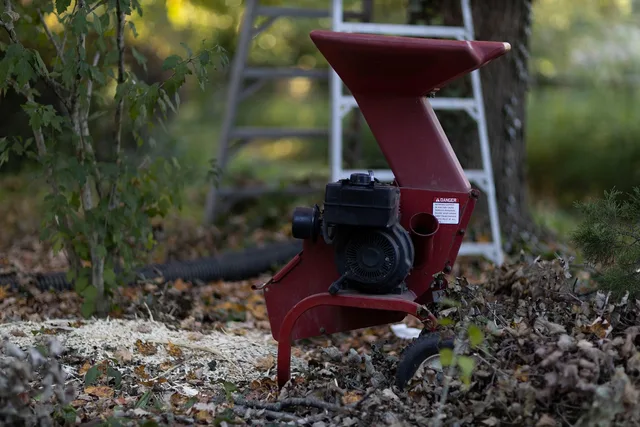
An owned chipper, grinder or bucket truck costs money whether it moves or not. Total the payment, insurance, maintenance and replacement reserve, then divide by the hours it truly runs.
A grinder at 400 hours a year costs far more per hour than the same machine at 1,200. The customer buys the hour, not the machine.
Used equipment cuts the monthly charge and raises the repair line. New and used tree service equipment weighs when each side wins.
Access priced as its own line
Two identical maples on one street can be two different jobs. One sits behind a locked gate on a slope. The other has a driveway wide enough to back the truck under the canopy.
Travel, setup, teardown, traffic control and site protection scale with access. A downtown job may need a parking permit a rural removal never touches.
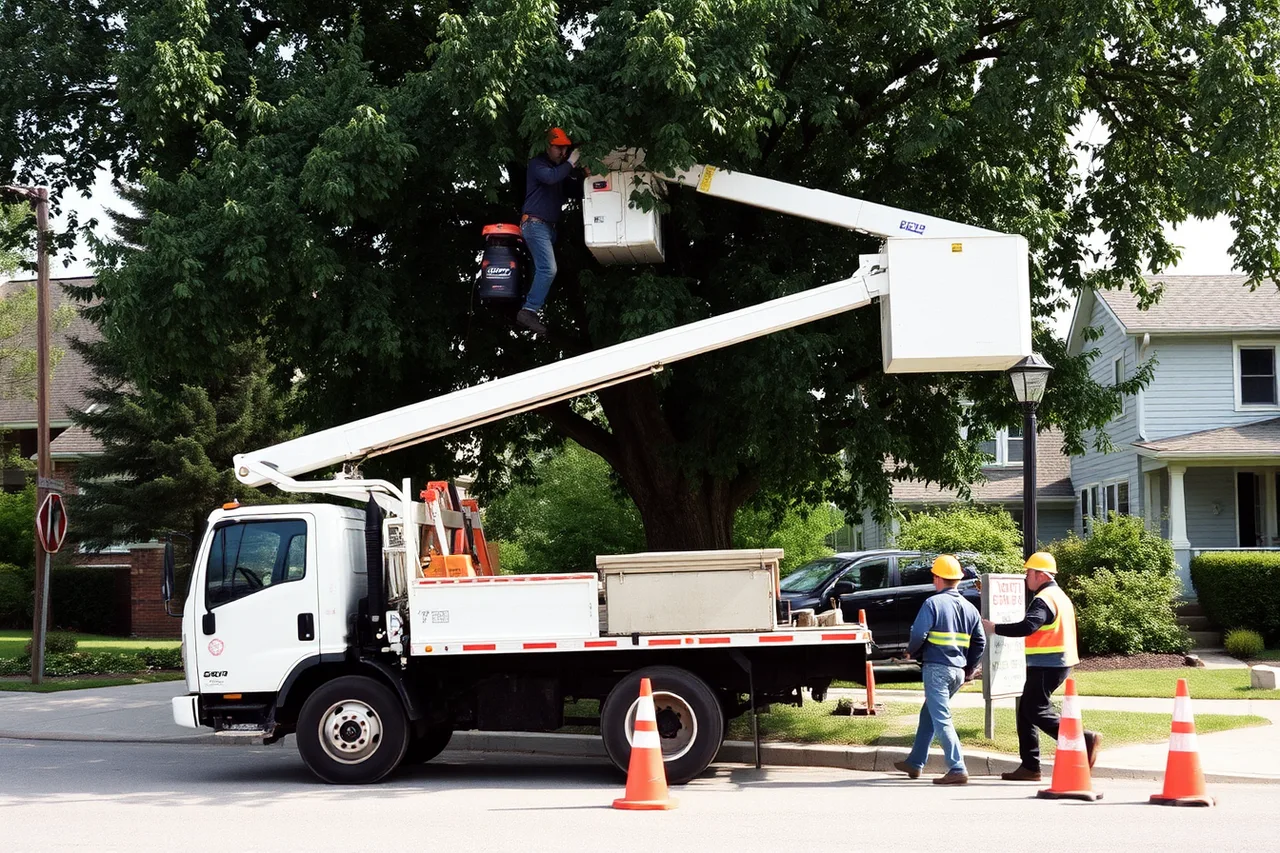
Quote access separately so the customer sees what they pay for. Fold it into an hourly rate and the crew absorbs the difference until the month closes.
Target margin and overhead
Overhead is everything the job does not pay for directly: office labor, sales visits, software, vehicle insurance, yard rent, marketing, unbillable driving. Those hours went to sites that did not close.
Set a target and hold it. A common working range for residential pruning and removals is 45 to 55 percent gross margin on direct cost, roughly a 1.8x to 2.2x markup. Test that range against tree service profit margins and break-even points before you trust it.
The SBA business guide covers planning, launch, management and growth, including startup costs, permits, insurance and hiring.
The cash gap between invoice and payment
A removal billed on the fifteenth may clear on the thirtieth of the next month. Deposits, progress payments and commercial retainage each stretch that gap.
Storm work makes it worse. The schedule fills in a week and the money arrives in six.
Track invoice-to-payment days by customer type. If residential work clears in twelve days and commercial in forty-five, the commercial price has to carry that difference.
Variance analysis after the job
Compare estimate against actual for labor, material, equipment, disposal and approved changes. Then compare callbacks, billing and collection.
A job that lands on budget overall can lose money on equipment and recover it on labor. Variance by cause shows which line moved, and total profit hides it.
The IRS guidance on business records says a business may keep a system that clearly shows income and expenses, with documents supporting purchases, sales, payroll and assets.
Change orders and discounts
No crew should start added work on a verbal yes. A change order records what was found, the price, the schedule effect and who authorized it.
The tree service quality assurance checklist treats unapproved work as a defect, not a favor. Discounts need the same trail, logged by reason and by approver.
Thirty days to a working model
- Week 1pull twenty closed jobs and write down actual hours, disposal, equipment and correction work.
- Week 2set one machine rate from real annual hours and test it on five quotes.
- Week 3add an access line to every estimate and record why each lost bid was lost.
- Week 4measure invoice-to-payment days by customer type and set commercial terms.