Guides
Reliable staff for a tree service business: where to look and how to choose
'tree service hiring' connects customer access, operating capacity, staffing, and cash. The point is not to copy a national benchmark or another operation's setup..
What to take away
- Ask every candidate the same job-related questions. Score the evidence on safety, craft, judgment, equipment and teamwork, plus records, customer conduct, reliability and learning.
- "tree service hiring" connects customer access, operating capacity, staffing, and cash.
- The point is not to copy a national benchmark or another operation's setup.
- The business needs a written model that fits its jurisdiction, customer and service mix, team, facility, and tolerance for risk.
- That model should be specific enough to test with real schedules and financial records.
This article provides general business information, not arboricultural, safety, pesticide, electrical, tax, or legal advice. Tree care licensing, credentials, utility-clearance rules and pesticide requirements vary by jurisdiction and scope. Confirm the rules before accepting work, including permits and safety duties.
Where to look for reliable tree service staff
Start with the trade's own boards and credential lists. The Tree Care Industry Association runs the TCIA Career Center, where member companies post crew, climbing and sales roles. The International Society of Arboriculture keeps a job board and a public directory of Certified Arborists.
General boards fill gaps faster. Indeed, ZipRecruiter and Craigslist carry ground crew, CDL driver and climber ads in most US markets. Craigslist job posts typically cost $10 to $75 depending on the city. Indeed and ZipRecruiter bill per job slot or per sponsored click.
Trade schools are slower but steadier. Mid-State Technical College in Wisconsin Rapids, Wisconsin runs an arborist technician program that sends entry-level climbers into crews. State technical colleges and land-grant forestry programs also offer urban forestry coursework.
Union halls supply trained line-clearance hands. IBEW locals hold utility tree-trimming agreements in many regions, and LIUNA represents other vegetation crews in some areas. Ask about book status, travel pay and apprentice openings. Helmets to Hardhats connects veterans and reservists with building trades apprenticeships.
Agencies and referrals buy time. PeopleReady and Labor Finders supply temporary general labor; bill rates typically run $20 to $30 an hour in most US markets. Vermeer and Bandit dealers, saw shops and nurseries know which crews buy gear and pay bills on time.
Entry-level groundspeople typically earn $16 to $22 an hour in most US markets as of 2026, and experienced climbers $25 to $40. Pay below the local range is one reason crews leave.
Verify before the first day. Run a motor vehicle record check on anyone who drives. Query the FMCSA Drug and Alcohol Clearinghouse for CDL holders. Confirm first aid and CPR cards, and ask which ANSI Z133 practices the candidate has worked under.
| Source | What it is | Who it suits | Typical cost |
|---|---|---|---|
| TCIA Career Center | Industry job board from the Tree Care Industry Association | Climbers, crew leads, sales arborists | Listing access varies by membership tier |
| ISA career center | Job board and public Certified Arborist directory | Plant health care, consulting | Exams and renewals typically a few hundred dollars |
| Indeed, ZipRecruiter, Craigslist | General job boards | Ground crew, CDL drivers, storm help | Craigslist typically $10 to $75; others bill per slot or click |
| Mid-State Technical College | Arborist technician program, Wisconsin Rapids, Wisconsin | Entry-level climbers | Public technical college tuition |
| IBEW and LIUNA halls | Union hiring halls | Line clearance, right-of-way work | Union scale under the agreement |
| PeopleReady, Labor Finders | Temporary labor agencies | Chipping, hauling, storm cleanup | Typically $20 to $30 an hour |
| Helmets to Hardhats | Veteran placement into trades apprenticeships | Veterans entering line clearance | Free to candidates |
Hire for crew fit and the shared sequence
Train the crew on the shared sequence, not on separate skills. Company site setup, communication and hand signals come first. Then work zones, material flow and equipment movement. Emergency actions, quality holds, cleanup and closeout close the loop.
Ask each new hire to walk through a tree service quality assurance hold they handled.
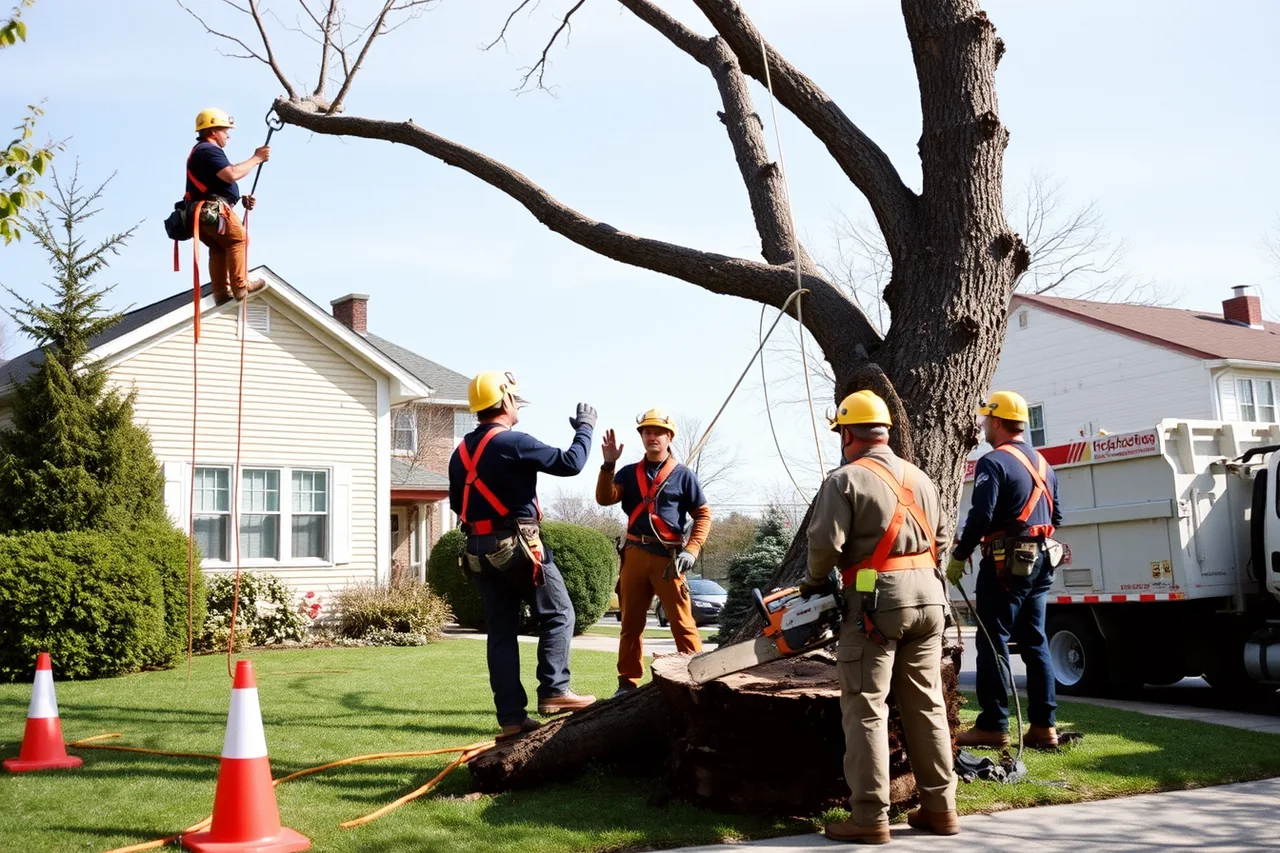
Start with a limited pilot and write down both the expected result and the earliest sign of failure. Compare team drills and field observations completed before and after the test, then decide whether to expand, revise, or stop. A common mistake is training individuals without the shared sequence.
Advancement promised at hiring
Map a route from ground work to crew lead. Craft levels, equipment tickets and credentials come first, then estimating, supervision and safety. Quality, training, project management and operations sit above that. Name one owner for the ladder and the records that prove each step happened.
Review internal progression and retention on a regular schedule. The practical risk is making management the only route to better pay.
Run structured interviews
Ask every candidate the same job-related questions. Score the evidence on safety, craft, judgment, equipment and teamwork, plus records, customer conduct, reliability and learning. The scoring sheet itself is part of tree service hiring and training.
Work the questions into real jobs. Ask a climber to walk through setting a line in a dead-limbed oak. Ask when a bucket truck is the wrong call, and who makes that call.
Ask about a job the candidate stopped, and what the customer was told. Ask how the drop zone stays clear when a homeowner walks under the tree. Ask what a good crew leader did that they would copy.
Test the decision in an ordinary week, then again under pressure. Cover site assessments, pruning jobs, removals and plant-health visits. Then equipment moves, cleanup, disposal and customer closeout. Give one person authority to keep the process and to make exceptions visible. Avoid hiring from confidence or similarity.
Offer, pay talk and the first 90 days
Put the offer in writing. State the starting rate, the schedule, who the hire reports to, and what moves the rate up. Give the range you can hold.
Ask what the candidate expects to earn and what would make them move. If their number sits above your range, say so and say why. Then ask what they would trade for it: guaranteed hours, a gear allowance, a truck, or paid certification. Write the agreement into the offer letter.
Confirm the start date, the meeting point, transport, and the gear the hire must bring. Send the first week's schedule before day one. Name one person who answers the new hire's questions for 90 days.
Check in on day one, at the end of week one, at day 30, and at day 90. Ask what is still unclear and what would make them leave. Fix small problems early. A review nobody reads helps no one.
Facts to confirm before acting
For tree service hiring, Occupational Safety and Health Administration: Tree Care Industry Standards supplies a checkable research point. Check the minimum age for each machine you assign, which tasks need a first aid and CPR card on site, and what training record you must keep for a new hire.
For tree service hiring, U.S. Bureau of Labor Statistics: Tree Trimmers and Pruners supplies a checkable research point. Several states require a pay range in the job posting, so confirm the rule for your state before the ad goes up.
The U.S. Department of Labor sets out what new employers must understand: wage, overtime and timekeeping duties. It also covers child labor, leave, notice and recordkeeping under federal and state law.
Final pass
The hiring work in "How to hire reliable staff for a tree service business" succeeds when it becomes a maintained operating system. Keep assumptions visible, assign ownership, and measure a few useful outcomes. Update the process as the business changes.
Every crew hour still has to be recovered in the quote. That quote is the subject of how to price tree service jobs.
From vacancy to a trusted hand
- Write the role as work on the job site, not as a title.
- Set a paid trial task using climbing gear on a real or realistic job site.
- Ask references about the bad days, not the good ones.
- Pair the new hire through a complete cycle of the work.
- Review at the end of the first quarter against the role as written, and adjust the role or the hire.
Common questions
What goes wrong when a new hire is trained alone?
A common mistake is training individuals without the shared sequence. Site setup, hand signals and communication come first. Then work zones, material flow, equipment movement, emergency actions and quality holds. Cleanup and closeout get drilled last.
What should an advancement promise avoid?
The practical risk is making management the only route to better pay. Craft levels, equipment and credentials form one track. Estimating, supervision and safety form a second. Quality, training, project management and operations a third. That ladder holds only if tree service profit margins carry it.