Guides
Where a tree service business actually makes money: margins and break-even
A tree service earns most of its money on removals, and the margin lives in disposal fees, access, equipment and crew hours, not in the bid price.
What to take away
- A tree service business pricing a removal at $2,400 with $1,050 of direct cost leaves $1,350 of gross margin, and the chipper, the dump fee and the truck hours decide whether that survives.
- Headline rangemost residential tree work lands at 45% to 60% gross margin.
- Crown reduction and dormant pruning carry the highest margin percentage, near 60%; storm work carries the lowest, often under 30%, because overtime and disposal spike together.
- Quote-to-close rate below roughly one in three usually means the price is wrong, not the sales pitch.
- Track revenue per crew hour, break-even per truck and referral share monthly, and check the figures against your own state fund or your province's WSIB, WorkSafeBC or WCB rate.
- Dollar figures are USD unless a line says CAD.
Where removals, pruning and storm work earn their margin
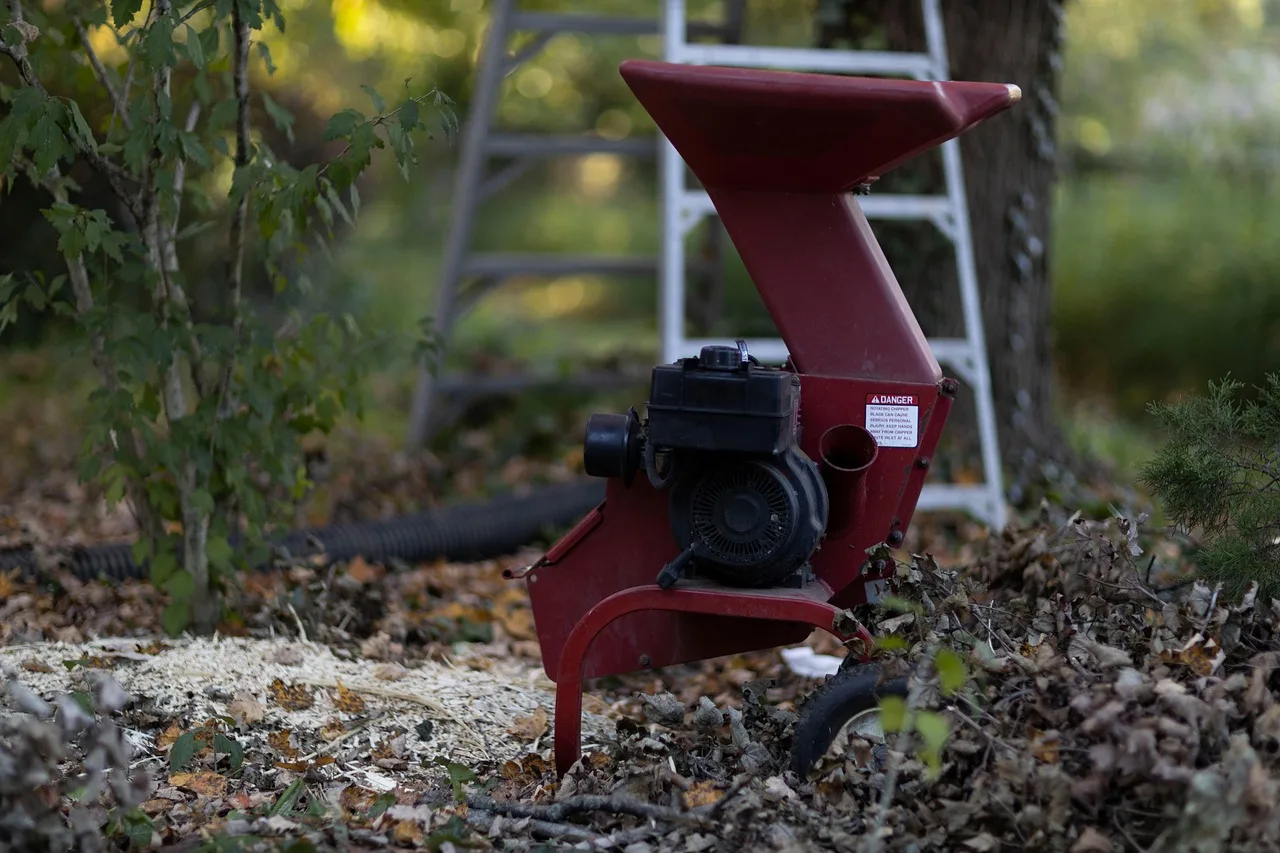
Tree work sells four things, and they do not earn the same. A removal is the money job: high price, high risk, heavy equipment such as a Bandit Intimidator 15XP chipper or an Altec LRV60 bucket truck.
Crown reduction is the margin job: same crew, less disposal, less rigging. Dormant-season pruning is the filler job that keeps a crew employed in February. Storm response is the cash-flow trap.
A crane-assisted removal on a tight lot can bill $5,200 and still land near 35% gross margin. A straightforward removal at $2,400 often holds 56%.
Direct cost rises faster than the invoice once a crane, traffic control and a second disposal run enter the bid. The removal that looks biggest is often not the one that pays best.
That gap is the whole business. How you price tree service jobs for a fair margin is really a question about which costs you remembered to put in the bid.
Start with a US removal, priced in USD. Three-person crew, a bucket truck, a chipper and one disposal run. Typical direct cost: about 14 crew hours at $38 to $45 fully loaded, tipping fees of $60 to $95 per ton, and $180 to $240 in fuel and truck time.
Chain, bar and blade wear adds $90. Price the job at $2,400, and direct cost lands near $1,000 to $1,200, a gross margin of about 50% to 58%.
Canada: the Toronto backyard, in CAD
Take a mid-size removal in a Toronto backyard. The crew is three people, with a bucket truck, a chipper and a disposal run. Price it at $2,400.
Direct cost lands near $1,050. This includes roughly 14 crew hours at $38 fully loaded. It also includes $220 in dump fees and $180 in fuel and truck time. Chain, bar and blade wear adds $90.
Gross margin is $1,350, or 56%.
A typical crown reduction on a similar lot bills $1,400 to $1,800, with $480 to $560 of direct cost, a 62% to 68% gross margin. Dormant pruning of four trees bills $800 to $1,000 with $320 to $380 of direct cost, a 58% to 64% margin.
Storm response can bill $6,000 in a day and land near 25% after overtime and three disposal loads.
Break-even per truck, in arithmetic you can run
Fixed monthly cost per truck is the number most owners never calculate. Add the truck payment or lease, insurance, and the annual inspection. Also add the chipper payment and storage or yard rent. Then add the dispatcher's share of wages and your own salary. Call that F.
Average gross margin per crew hour is revenue minus direct cost, divided by crew hours. Call that M. Break-even hours per month is F divided by M.
If F is $9,800 and M is $95, the truck must bill 103 crew hours a month before it earns a dollar. At 160 billable hours, the truck contributes $5,400. At 90 hours, it loses money and the owner usually blames the market.
Run the same arithmetic for the stump grinder and the climbing kit. A grinder that sits idle eight months a year still carries insurance and a payment. That is why tree service pricing and profit starts with utilization, not with the rate card.
A Rayco RG55 stump grinder carries about $450 a month in payment and insurance and earns $80 of gross margin per engine hour. Break-even is 6 hours a month, so two jobs a week cover it.
A crane-assisted truck with F of $18,000 and M of $130 needs 139 crew hours a month. That is before the crane rental day rate of $1,400.
ArborGold, SingleOps and Jobber all track crew hours against a job, and typical plans run $50 to $250 per user per month. The software does not set your margin, but it shows which crew hour paid and which did not.
Four margin leaks: disposal, access, labour burden, callbacks
Disposal is the quiet killer. A US transfer station often charges $60 to $95 per ton for wood waste, so a large removal can add $300 to $600 in tipping fees alone.
Chip hauled 40 miles costs more than chip dumped 8 miles away. Logs that a mill will take for free are profit; logs that go to landfill are a loss.
Access is the second leak. A gate narrower than the chipper, a slope the truck cannot climb, a lawn that needs plywood matting, a power line that needs a utility disconnect. Each one adds hours that were never in the estimate. Matting and careful access can add two crew hours, or $80 to $110 at typical US burdened rates.
Labour burden is the third. US workers' compensation for tree care is classified state by state and often runs several times the rate for clerical work. On a $100,000 payroll, a rate of $15 per $100 of payroll adds $15,000 a year before any wages.
In Canada, WSIB premiums for tree care and grounds maintenance sit in a rate group the Workplace Safety and Insurance Board publishes each year. WorkSafeBC publishes its own base rates by classification unit, and Alberta WCB publishes theirs.
Typical published rates for tree care work run about $1.50 to $4.00 per $100 of payroll in those provinces. Payroll burden also includes the training hours a certified arborist needs to stay current.
The fourth leak is the callback. A tree that drops limbs after the crew leaves costs a second mobilization and a second disposal run, with no invoice attached. One callback typically adds $400 to $700 in crew time and disposal.
A Stihl MS 500i or a Husqvarna 395 XP that needs a new bar and chain set every few weeks is a cost line, not a rounding error.
How the pricing approaches compare
Typical gross margin
- Fixed price per removal
- 45% to 60%
- Hourly with a minimum
- 30% to 45%
- Good, better, best bundles
- 50% to 65%
- Retainer or membership
- 40% to 55%
- Crane-assisted removal with disposal pass-through
- 28% to 40%
Where it fits
- Fixed price per removal
- Repeatable work on similar lots
- Hourly with a minimum
- Scope unknown until the first cut
- Good, better, best bundles
- Homeowners who want a clear choice
- Retainer or membership
- Recurring dormant-season pruning
- Crane-assisted removal with disposal pass-through
- Tight lots, street closures, heavy wood
What it hides
- Fixed price per removal
- One difficult site can wipe out three good ones
- Hourly with a minimum
- A fast crew earns less for the same result
- Good, better, best bundles
- Packages drift from what the crew delivers
- Retainer or membership
- Members expect priority when storm work fills the calendar
- Crane-assisted removal with disposal pass-through
- Crane day rate and traffic control can erase the premium
Name the scope lines that repeat across the most profitable tree service packages first. The ones that structure tree service packages for customers will let you defend. You can defend when a homeowner asks why the second quote is cheaper.
The numbers to watch monthly
Revenue per crew hour is the first. Divide total invoiced revenue by total crew hours on site, including travel between jobs. A drop of $15 an hour across four crews is a real wage cut you did not choose.
Healthy residential tree work typically bills $140 to $220 per crew hour in 2026, with crane days higher.
Quote-to-close rate is the second. Below one in three, your price is usually wrong or your scope is unclear. Above two in three, you are probably leaving money on the table.
Referral share is the third. If more than half your work comes from repeat customers and referrals, your marketing spend can stay low. If it drops below a quarter, every job is a cold start and the cost per acquisition eats the margin.
Break-even per truck is the fourth, and it is the one that decides whether you buy a fifth truck or repair the fourth. Compare estimate variance by cause, not by total project profit, so the next bid carries the lesson.
Software such as ArborGold, SingleOps or Jobber will chart these, but the numbers only matter against your own three-month average.
Common questions
What margin should a tree removal actually earn?
A residential removal on a normal lot typically lands between 45% and 60% gross margin before overhead. Below 40%, check disposal distance, crew hours and whether the bid included access work. Above 65%, check that you have not underbid the risk.
How do I calculate break-even per truck?
Add every fixed monthly cost for that truck, including insurance, payments, yard space and a share of dispatch wages. Divide by your average gross margin per crew hour. The result is the billable hours that truck needs each month before it contributes anything.
Which job type has the worst margin?
Storm response. Overtime, night work, damaged equipment and long disposal runs arrive together, and the customer is often an insurer paying on its own schedule. Price storm work with a separate rate and a deposit, and confirm coverage terms with the insurer before the crew rolls.
Where do I find the wage and recordkeeping figures?
The U.S. Bureau of Labor Statistics: Tree Trimmers and Pruners page publishes occupation and geographic wage estimates.
The Internal Revenue Service: What kind of records should I keep? page covers the records that support income and expenses. The U.S. Small Business Administration: SBA Business Guide covers planning, launch and growth.
In Canada, use your provincial workers' compensation board's published rate for your classification unit.
This article provides general business information, not arboricultural, safety, tax or legal advice. Rigging, climbing, felling and chainsaw work at height require hands-on training from a certified arborist trainer and compliance with CSA Z133.
Private-tree permits, TFW eligibility and workers' compensation classification vary by jurisdiction, so confirm with the relevant municipal bylaw office, provincial labour ministry or immigration counsel.