Guides
What do WSIB, WorkSafeBC and Alberta WCB cost a tree service crew?
Tree service business operations in Ontario, BC and Alberta face different WSIB, WorkSafeBC and WCB premiums, clearance letter rules and payroll duties.
What to take away
- In tree service business operations across Ontario, British Columbia and Alberta, workers' compensation is mandatory for almost every employer with staff, and the premium you pay follows a classification unit, not a flat national rate.
- Indicative 2025 rates for tree service and landscaping units run from roughly $1.20 to $2.50 per $100 of payroll. British Columbia is the highest of the three and Alberta the lowest.
- WSIB in Ontario bills by rate group and classification unit, and independent operators can be drawn into compulsory coverage.
- WorkSafeBC sets rates by classification unit, requires payroll reporting and a clearance letter from contractors you hire.
- Alberta WCB charges by industry rate and expects employers to report worker earnings and keep safety records.
- Clearance letters are the cheapest risk control you have. Request one before every subcontract and check the expiry date.
- Your premium is a payroll calculation, so hours, subcontractor status and claim history all move the number.
What workers' compensation covers for a tree service crew
Workers' compensation is provincial no-fault insurance for workplace injury and illness. It pays for treatment, wage replacement and permanent impairment benefits, and it shields the employer from most lawsuits by injured workers.
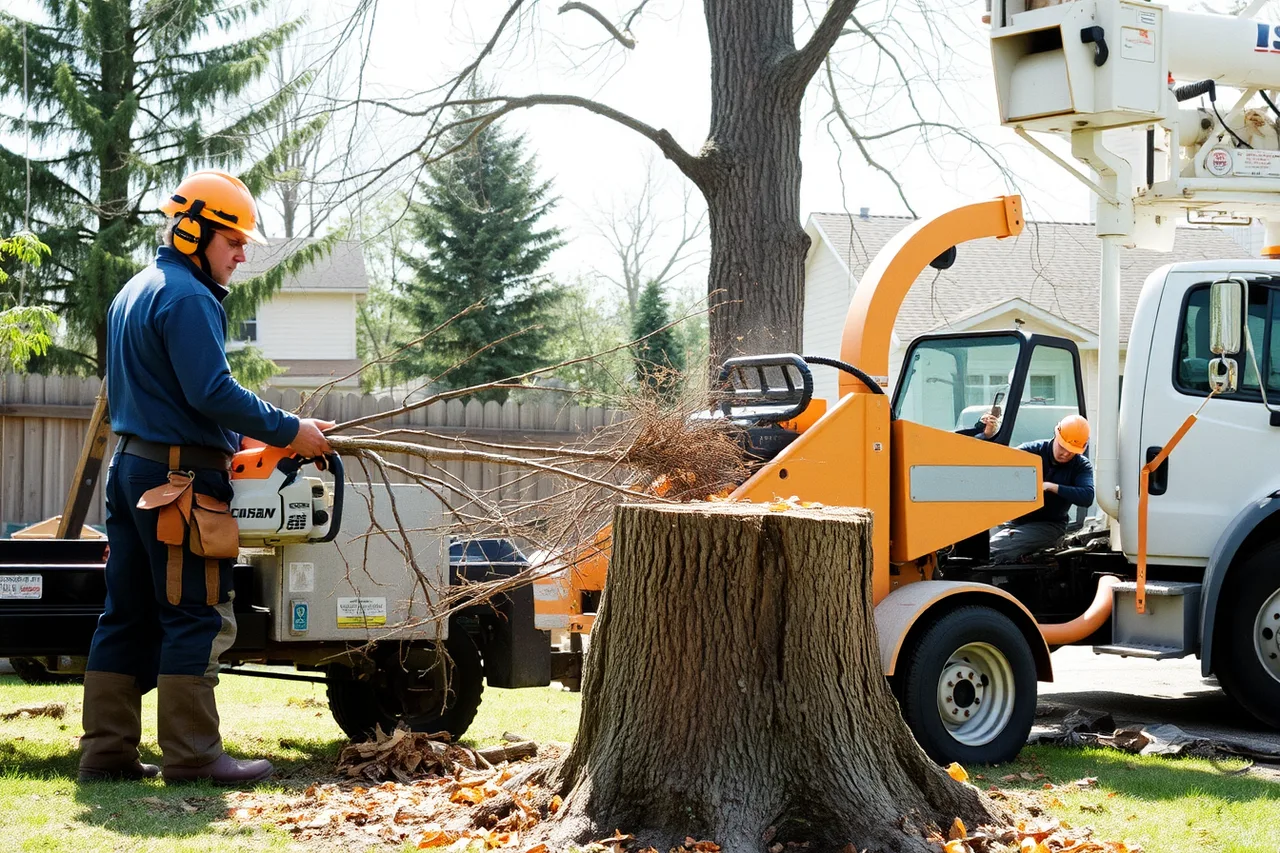
For an arborist crew the exposure is obvious. Chainsaw cuts, falls from height, struck-by limbs, chipper injuries and repetitive strain all land on the same policy. So do occupational disease claims that surface years later.
Coverage also carries duties beyond the premium. You must register, report payroll, report injuries within the provincial deadline and cooperate on return-to-work planning. Miss those and the cost rises through penalties, not just rates.
Each province runs its own board. Ontario uses the Workplace Safety and Insurance Board, known as WSIB. British Columbia uses WorkSafeBC. Alberta uses the Workers' Compensation Board, usually called Alberta WCB.
That matters if you work across a border. A crew based in Kelowna that takes a contract in Alberta can end up dealing with two boards. The usual relief is an interprovincial agreement, but you still have to register and report where the work happens.
The practical link to your other costs is direct. Premiums sit alongside vehicle cover, equipment cover and liability in your insurance costs and coverage budget, and they move with the same payroll figure that drives your pay rates and labour costs.
WSIB in Ontario: classification, premiums and clearance letters
WSIB registration is compulsory for most Ontario employers with workers, including part-time and seasonal staff. In arboriculture the rate group is tied to landscaping and tree services, and your classification unit within that group sets the premium rate.
Indicative 2025 rates for the landscaping and tree service units sit in a range of roughly $1.80 to $2.40 per $100 of insurable payroll. WSIB's average premium rate has been close to $1.30 per $100 in recent years, so tree work pays above the provincial average. Your own rate notice is the number that binds you.
Rates are expressed per $100 of insurable payroll. Insurable payroll is not just wages: it includes regular earnings, overtime, vacation pay, bonuses and most taxable benefits. Directors who draw a salary can be covered too.
Independent operators are the trap. If a climber works only for you, supplies their own tools and looks like a contractor on paper, WSIB can still treat them as a worker and assess you for their coverage. The tests look at control, ownership of tools and chance of profit.
Reporting runs through WSIB's online services. You report payroll and pay premiums on a schedule set by your account, and you reconcile at year end against CRA payroll records. Under-reporting is the fastest route to an audit and a penalty.
Clearance letters matter when you subcontract. A clearance letter confirms a business is registered and has paid what it owes, and it protects the hiring contractor from being assessed for that subcontractor's unpaid premiums. Request one before every subcontract, and check the expiry date.
There is no fee for a WSIB clearance certificate, and you request one through the board's online services using the subcontractor's account number or legal name.
Ontario employers also carry duties under the Occupational Health and Safety Act, plus working-at-height and tree care rules. A serious injury brings a WSIB claim and a Ministry of Labour inspection at the same time.
New owners often underestimate the paperwork. A compliance checklist for new owners is a reasonable way to sequence registration, payroll setup and safety duties before the first crew starts.
WorkSafeBC: coverage costs, payroll reporting and Notice of Project
WorkSafeBC coverage is mandatory for most employers in British Columbia, including tree service firms with any paid worker. The board sets out who needs coverage and how to register in its guidance on coverage requirements.
Your cost depends on two things: the rate for your classification unit and the amount of payroll you report. WorkSafeBC explains how those two inputs produce a premium in its overview of how coverage costs are determined.
Indicative 2025 rates for the landscaping and arboriculture unit have run roughly $1.90 to $2.50 per $100 of assessable payroll. WorkSafeBC's average base rate has been near $1.55 per $100 in recent years, so tree work sits above the provincial average.
Finding the right classification unit is the first task. Tree service work generally falls in a landscaping or arboriculture unit, and the rate differs from construction or logging units. WorkSafeBC publishes a tool to find your classification unit and rate.
Reporting is periodic and online. Employers report payroll and pay premiums on the schedule WorkSafeBC assigns, with a reconciliation after year end. Payroll includes wages, salaries, commissions and most allowances.
Subcontracting is where clearance letters do real work. WorkSafeBC sets out their purpose and limits in its explanation of why you need a clearance letter.
Larger or higher-risk jobs may also require a Notice of Project. It gives WorkSafeBC advance notice of the work, the site and the safety personnel involved, and it is separate from your payroll account.
British Columbia also regulates tree work under the OHS Regulation, including fall protection and equipment rules. Those duties sit with the employer, not the client who hired the crew.
Alberta WCB: premiums and safety documentation duties
Alberta employers in tree services must register with the Workers' Compensation Board and open an account once they hire workers. Coverage is compulsory for most industries, with limited exemptions that rarely fit a crew running saws and chippers.
Indicative 2025 industry rates for tree service work have run roughly $1.20 to $2.00 per $100 of assessable earnings. Alberta's average premium rate has been close to $1.25 per $100, the lowest of the three provincial averages here.
Premiums are calculated on assessable earnings multiplied by your industry rate, expressed per $100 of payroll. Alberta also applies an earnings ceiling per worker, so very high wages are only partly assessable.
Industry rates in Alberta are set annually and reflect the claims experience of the industry as a whole, with an employer's own record feeding into adjustments over time. A clean claims history is worth real money on a tree crew.
Payroll reporting in Alberta is done through WCB online services. You report assessable earnings for the reporting period, pay the premium, and reconcile at year end. Directors and owners can elect coverage in some cases.
Alberta also expects safety documentation. Employers must report injuries, investigate incidents, and keep records of training, hazard assessments and equipment inspections. Those records are what a WCB officer asks for after a fall.
The province's OHS Act and Code set the underlying duties. Tree work touches fall protection, chainsaw and chipper safety, and electrical hazard limits near power lines.
Alberta firms that also work in British Columbia or Ontario should expect to register in each province where work is performed, then sort out which board holds the account under an interprovincial agreement.
Comparing premium rates and clearance letter practice across the three
All figures in this article come from the boards' published rate tables for 2025, the most recent full year available at the time of writing. Rates are set again each year, so check the 2026 rate notice for your account before you budget. The method stays constant: classification unit plus payroll, adjusted by claims experience.
Comparing premium rates and clearance letter practice
WSIB (Ontario)
- Rate basis
- Per $100 of insurable payroll
- Classification
- Rate group and classification unit
- Reporting
- Online payroll reporting and year-end reconciliation
- Independent operators
- Can be treated as workers
- Clearance letters
- Available for subcontractors
- Project notice
- Not a standard requirement
WorkSafeBC
- Rate basis
- Per $100 of assessable payroll
- Classification
- Classification unit and industry
- Reporting
- Periodic payroll reports and reconciliation
- Independent operators
- Coverage tests apply
- Clearance letters
- Standard practice for contractors
- Project notice
- Notice of Project may apply
Alberta WCB
- Rate basis
- Per $100 of assessable earnings
- Classification
- Industry rate group
- Reporting
- Periodic earnings reports and reconciliation
- Independent operators
- Coverage tests apply
- Clearance letters
- Available for subcontractors
- Project notice
- Not a standard requirement
Here is the same crew run through each province: five climbers on $55,000 each, giving payroll of $275,000.
The rates in that table are the mid points of the ranges above. Alberta's assessable earnings ceiling sits well above $55,000 per worker, so the whole payroll is assessable there. A clean claims history can put you below these figures, and a costly one well above.
On these ranges British Columbia is the most expensive of the three for tree work and Alberta the cheapest, with Ontario in between. The order is not fixed. A change in classification unit, a lost-time claim or a new rate notice can move any province up or down.
Clearance letter practice is the clearest difference in day-to-day operations. In British Columbia, requesting one before a subcontract is normal and expected. Ontario and Alberta both offer clearances, but many small tree firms still skip them until an audit or a claim forces the issue.
A clearance letter is not a substitute for your own safety program, and you still owe the same duties to a subcontractor's crew as to your own staff.
If you operate in more than one, keep separate payroll records from day one. Reconstructing which hours belong to which province months later is expensive, and it is the kind of detail covered in a broader licensing and compliance guide.
Safety documentation that keeps premiums down
Premium rates follow claims experience. Fewer injuries and faster return to work mean a lower rate over time, and the paperwork is how the board sees your effort.
Start with the documents every provincial board expects:
- Written safety policy signed by the owner
- Hazard assessments for each site before work starts
- Fall protection and climbing equipment inspection logs
- Chainsaw, chipper and stump grinder training records
- Incident and near-miss reports filed within the provincial deadline
- Return-to-work plans for injured workers
- Clearance letters on file for every subcontractor
Then run the reporting side properly:
- Register with the board in each province where you employ workers.
- Confirm your classification unit matches the work you actually do.
- Report payroll on the assigned schedule and reconcile at year end.
- Report injuries within the deadline and start return-to-work talks early.
- Review your rate notice each year and question anything that looks wrong.
Near-miss reporting is the cheapest control you have. A limb that grazes a climber today is a lost-time claim next month, and the written record shows the board you act on what you find.
Training records carry weight too. The CSA Z133 standard for arboricultural operations is the reference most Canadian crews work to, and documented training in climbing, rigging and chipper use supports both your defence and your rate.
Claims cost more than premiums. A lost-time injury pulls wages, replacement labour, equipment downtime and administrative time into the same month. Those costs belong in your tree service equipment budget alongside the premium itself.
Common questions
Do I need workers' compensation if I am a sole owner-operator with no employees?
It depends on the province and on whether you are incorporated. Ontario can require coverage for independent operators in construction-related work, while Alberta and British Columbia have their own tests. Ask the board directly before assuming you are exempt.
How is my premium rate actually set?
Each board assigns your business a classification unit or industry rate based on the work you do, then multiplies that rate by your reported payroll. Your own claims history can adjust the rate over time.
What is a clearance letter and when do I need one?
It is a document confirming a contractor is registered and current with premium payments. Request one before hiring a subcontractor, and keep it on file with its expiry date.
Can I be assessed for a subcontractor's unpaid premiums?
Yes, in many cases. If you hire an uncleared firm and it owes premiums, the board can pursue you for the amount. A clearance letter is the standard protection.
Does working in two provinces mean two accounts?
Usually yes, at least for registration and reporting. Interprovincial agreements can sort out which board holds the account, but you still report the work performed in each province.
What happens if I under-report payroll?
Expect an audit, a reassessment and penalties on the shortfall. Boards cross-check your reports against CRA payroll records, so the gap is easy to find.