Guides
How to start tree service business: first-crew plan
How to start tree service business by organizing the first crew: assign owner and worker roles, sequence launch tasks, choose equipment, and plan pricing.
What to take away
- Register the entity, get the EIN, arrange insurance, and verify applicable licenses. Buy equipment last.
- Treat the $25,000 to $40,000 setup range for a used chipper and pickup as rough: the pickup and full insurance costs are not itemized, and eight weeks of wages are additional.
- A general business license rarely covers regulated tree work. State arborist rules, permits and utility clearance are separate.
- A standard removal runs $300 to $1,500 in most U.S. markets. A hazard removal near a house runs $2,000 to $5,000.
The question “how to start tree service business” is a first-crew planning question here: choose work the crew can deliver, then match equipment, pricing and hiring to it. This is general business information, not legal, tax, arboricultural or safety advice. Rules differ by state and utility.
The order of operations
- Week 1pick the service mix. Residential pruning, plant health care and utility line clearance need different crew skills, equipment and insurance considerations.
- Week 1 to 2form an LLC and apply for a free EIN. The SBA business guide treats permits and insurance as launch tasks, not afterthoughts.
- Week 2 to 3request insurance quotes and verify applicable license and permit requirements before scheduling regulated work. Allow time for approvals.
- Week 3 to 4buy the opening kit. Rent anything you expect to use fewer than ten days a month.
- Week 4write the price list and set up scheduling and invoicing. Jobber and Arborgold handle crews and invoices; QuickBooks tracks job cost.
- Week 5 onwardtake paid work and review estimate variance weekly for eight weeks.
Startup cost items to check
| Item | Typical cost |
|---|---|
| LLC filing, state fee | $50 to $500 |
| EIN from the IRS | $0 |
| Trade or contractor license, where required | $0 to $500 |
| General liability, $1m per occurrence | quoted; often $2,000 to $6,000 a year |
| Workers' compensation | quoted; set by payroll and class code |
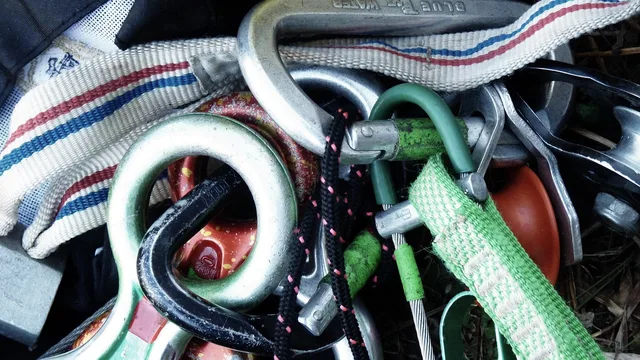
| Climbing kit, ropes, saddle, saws, PPE | $2,000 to $4,000 |
| Used 12-inch chipper | $18,000 to $30,000 |
| Used bucket truck | $30,000 to $60,000 |
The table lists selected costs, not a complete first-crew cash budget: it does not itemize the pickup or commercial auto, and workers' compensation is quoted. The tree service equipment checklist names what an opening kit has to cover.
Prices are typical ranges, not quotes. A Stihl MS 261 C-M typically lists near $700, and a Husqvarna 550 XP Mark II near $650.
One crew with a used chipper and no bucket truck usually opens for $25,000 to $40,000. Add a used bucket truck and the range moves to $55,000 to $100,000.
Insurance and local checks
Before taking work, use the SBA's licenses and permits guidance to identify the state or local agency responsible for the work location, then confirm requirements directly with that agency. Business registration, trade licensing, green-waste handling and utility coordination can be separate issues; do not assume a general business license covers every service.
[figure 1]
Licenses and permits to map
- Entity registration
- Trade licensing
- Local permits
- Environmental duties
- Utility coordination
- Vehicle rules
- Employment requirements
Carry general liability of $1 million per occurrence and $2 million aggregate. Most states require workers' compensation and commercial auto cover once you hire. Check the class code names tree work, not lawn care.
Equipment for the first crew
Buy in this order: climbing kit, saws and PPE; a chipper with a chip box or dump trailer; then a lift.
A used 12-inch chipper from Vermeer, Bandit or Morbark holds value and parts are easy to find.
Rent a mini skid steer, stump grinder or crane for one-off jobs. A Toro STX-38 typically lists near $30,000 new, so renting wins at low volume.
Pricing and the first customers
Price by the job. A two-person crew bills $75 to $150 an hour in most markets, typical as of 2026.
Removals run $300 to $1,500, and hazard removals near structures run $2,000 to $5,000. Stump grinding runs $100 to $400 per stump.
Crane-assisted removals cost $1,500 to $3,000 a day plus the crane rental. The pricing that protects margin guide shows how to quote so one long job does not eat the profit.
Claim a free Google Business Profile and post photos of finished jobs. Yelp, Nextdoor, Angi and Thumbtack sell leads; budget for the ones that convert. Ask every satisfied owner for a referral.
First hires and training
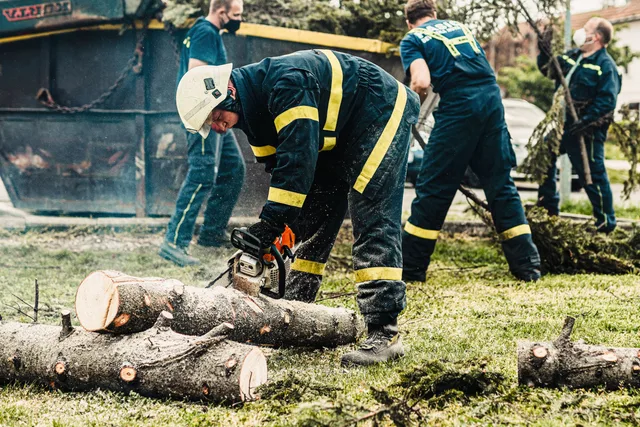
For a two-person launch, the owner leads estimates, scheduling, customer communication, job scope and the pre-job briefing; on site, the owner takes a climbing or cutting task only when trained and qualified. The first ground worker handles brush movement, chipping and cleanup under the work plan. Do not schedule work beyond the crew's qualifications, equipment or safe capacity. Hire in this order: a ground worker first, then a climber, then a part-time ISA Certified Arborist, then office help.
Pay $20 to $35 an hour for ground workers and $25 to $45 for climbers, typical as of 2026. The BLS wage estimates for tree trimmers and pruners give state figures to check against your offers.
New hires need ANSI Z133.1 training and documented PPE. The OSHA tree care page sets out the safety duties that stay with the employer.
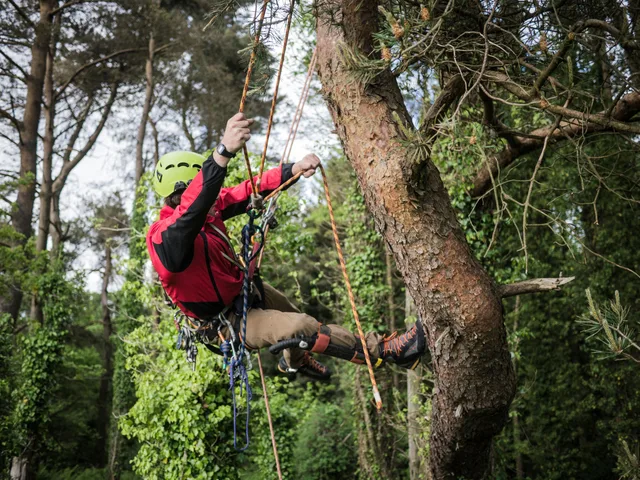
Climbers should hold first aid and aerial rescue training. Before assigning a bucket-truck driver, check the vehicle's federal CDL classification and applicable state requirements; a bucket truck alone does not establish whether a CDL is required. For utility line-clearance work, check OSHA's 29 CFR 1910.269(r) line-clearance tree-trimming requirements and the utility's own clearance rules. Reliable staff for a tree service business covers where to find them.
Example: one crew's first season
These figures illustrate one crew. They are not a forecast.
Two people with a used chipper and a pickup take fourteen jobs a month at an average $850, or about $11,900.
One ground worker at $28 an hour for 160 hours costs $4,480. Fuel, dump fees and saw maintenance take roughly $900. Insurance and the equipment payment take about $1,000 more.
That leaves about $5,500 before the owner's pay and taxes.
By dormant-season pruning the calendar outgrows the equipment. Six months of job data then decides between a second chipper and a used bucket truck.
Common questions
How much money do I need before the first job?
Budget $25,000 to $40,000 as a rough setup range for one crew with a used chipper and pickup, not as the full cash needed. The table does not itemize the pickup or commercial auto, workers' compensation is quoted, and you should add eight weeks of wages. A bucket truck is usually a second-year purchase.
Do I need a license to cut trees?
Entity registration and insurance apply nearly everywhere. Use the SBA's licenses and permits guidance to identify the state or local agency for the job location, then confirm whether that office requires a tree or arborist license or permit for the specific work. Utility line clearance carries separate requirements; check OSHA's 29 CFR 1910.269(r) and the utility's clearance rules.
What equipment should I buy first?
Climbing kit, saws, PPE and a used 12-inch chipper. Rent the lift until the calendar shows more than ten lift days a month.
When should I hire my first employee?
When the owner is the bottleneck on the second job of the day and cash covers eight weeks of wages. Hire for the ground first, since that task slows a climbing crew most.